
5 Astonishing Facts About Saudi Arabia You Didn’t Know – Travel Explorer Edition 2026
Discover five fascinating facts about Saudi Arabia in 2026 with Travel Explorer. Explore futuristic cities, sacred landmarks, cultural transformation, and natural wonders that are redefining travel in the Middle East.
ASIA
11/5/20255 min read
Introduction
When people think of Saudi Arabia, what usually comes to mind is oil wealth or the holy cities of Mecca and Medina. But beyond these well-known aspects, the Kingdom is now emerging as one of the world’s most exciting destinations for travelers. Thanks to Vision 2030, an ambitious plan to diversify its economy, Saudi Arabia is opening its doors to tourism, adventure, and innovation like never before.
In this Travel Explorer 2026 edition, we reveal five astonishing facts about Saudi Arabia that show how it is balancing tradition with modernity, turning into a futuristic yet deeply cultural country worth exploring.
Fact 1: Saudi Arabia’s Mega Projects Are Redefining the Future
Saudi Arabia is not just planning for tomorrow — it’s building it. The Kingdom is home to some of the largest and most futuristic construction projects in the world. Under the Vision 2030 initiative, these mega projects aim to transform Saudi Arabia into a global center for innovation, sustainability, and luxury tourism.
NEOM – The $500 Billion Futuristic City
One of the world’s boldest projects, NEOM, is a $500 billion smart city that represents Saudi Arabia’s vision for a sustainable future. Located in the northwest region, NEOM will feature The Line — a 170-kilometer linear city with no cars, no streets, and zero carbon emissions.
The Line will be powered entirely by renewable energy and will feature vertical living spaces designed for efficiency and comfort. Everything a resident needs — from workspaces to parks to schools — will be accessible within a five-minute walk.
Travel Explorer describes NEOM as a “living laboratory” where innovation and nature coexist. When completed, it will become a global benchmark for smart living, sustainable energy, and advanced urban planning.
The Red Sea Project – Where Luxury Meets Sustainability
Along Saudi Arabia’s western coastline lies another massive development — the Red Sea Project. This initiative covers over 90 islands, coral reefs, and volcanic landscapes and aims to create one of the most luxurious and environmentally friendly destinations in the world.
The Red Sea Project combines high-end tourism with ecological preservation. Visitors will experience crystal-clear waters, untouched coral reefs, and desert landscapes, all while staying in eco-friendly resorts that run on renewable energy.
According to Travel Explorer, the first phase of the Red Sea resorts will be open by 2026, setting new global standards for sustainable tourism and luxury hospitality.
Fact 2: Saudi Arabia Is the Heart of the Islamic World
While Saudi Arabia is embracing modernity, it remains the spiritual center of Islam. The Kingdom is home to Mecca and Medina — two of the holiest cities for Muslims worldwide.
Mecca – The Spiritual Capital of Islam
Mecca is the birthplace of Prophet Muhammad and the home of the Kaaba, the holiest site in Islam. Every year, millions of Muslims from around the world travel to Mecca to perform Hajj and Umrah — sacred pilgrimages that represent faith, unity, and devotion.
The Grand Mosque, also known as Masjid al-Haram, is the largest mosque in the world and an architectural marvel. Its massive scale and intricate design reflect both the faith and modern vision of Saudi Arabia.
Medina – The City of the Prophet
Medina, located a few hundred kilometers from Mecca, holds immense spiritual importance as the city where Prophet Muhammad is buried. The Prophet’s Mosque, Al-Masjid an-Nabawi, stands at the center of Medina and is a site of deep reverence for Muslims.
Travel Explorer notes that Saudi Arabia has introduced major infrastructure upgrades, including high-speed rail lines and modernized airports, making pilgrimages safer, faster, and more comfortable than ever before.
These cities continue to inspire millions, representing not only the essence of Islam but also the heart of Saudi Arabia’s cultural identity.
Fact 3: Saudi Arabia’s Natural Beauty Will Surprise You
Contrary to the common perception of endless deserts, Saudi Arabia is one of the most geographically diverse countries in the Middle East. From mountain peaks and green valleys to coral reefs and volcanic plains, the country offers landscapes that surprise even seasoned travelers.
The Asir Mountains – The Green Gem of Arabia
In the southwestern part of the country lies the Asir region, home to the stunning Asir Mountains. The area enjoys cooler weather, lush greenery, and frequent misty skies — a rare contrast to the desert heat typical of the region.
The city of Abha, known as the “City in the Clouds,” is a popular travel destination surrounded by cliffs, parks, and traditional villages. Cable car rides over Al Soudah Park offer panoramic views of deep valleys and forests.
Travel Explorer calls the Asir region “Saudi Arabia’s Switzerland,” for its natural beauty, cultural richness, and refreshing climate.
Al-Ula – A Living Museum in the Desert
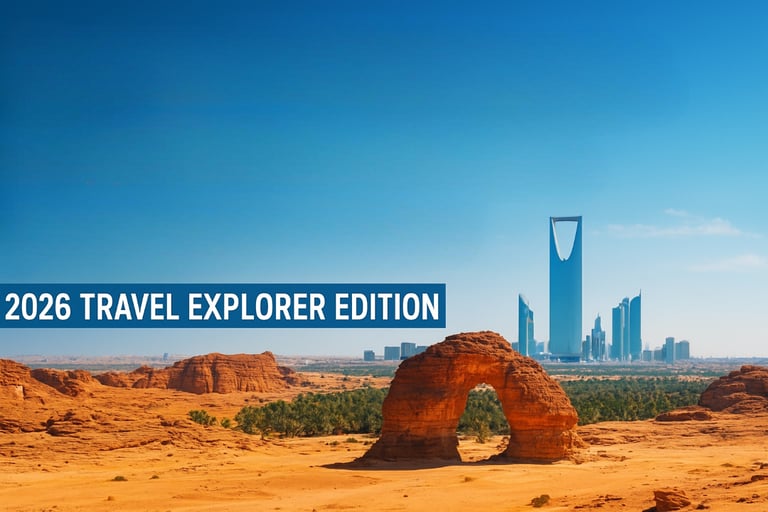
Al-Ula is a breathtaking destination filled with ancient tombs, sandstone formations, and rock art that tell the story of civilizations long gone. The most famous site, Hegra (also called Madain Saleh), was Saudi Arabia’s first UNESCO World Heritage Site.
Carved into red sandstone cliffs, Hegra’s tombs date back to the Nabataean civilization — the same people who built Petra in Jordan. Al-Ula is now also home to world-class events like the Winter at Tantora Festival, blending history, art, and music.
Travel Explorer describes Al-Ula as “an open-air museum where history meets serenity.”
The Red Sea Coast – A Hidden Paradise
Saudi Arabia’s 2,000-kilometer Red Sea coastline is a diver’s dream, with some of the world’s most untouched coral reefs. The turquoise waters and vibrant marine life make it one of the best emerging beach destinations in Asia.
Travelers can explore islands, go snorkeling, or enjoy luxury yachts in newly developed marine resorts. With the Red Sea Project nearing completion, this region is expected to rival Maldives and Seychelles in natural beauty.
Fact 4: Saudi Culture Blends Ancient Tradition with Modern Life
Saudi Arabia’s rapid modernization hasn’t erased its traditions — it’s blended them with modern values. Over the past decade, the Kingdom has undergone cultural reforms that balance heritage with global innovation.
Empowering Women and Youth
Saudi Arabia has made historic progress in women’s rights and youth empowerment. Women now drive, travel independently, and participate in business, media, and government roles.
The country’s youth, who make up the majority of the population, are playing a crucial role in shaping its future. Young entrepreneurs, artists, and technologists are redefining what it means to be Saudi in the modern world.
The Rise of Entertainment and Sports
Saudi Arabia has become an entertainment powerhouse. Events like Riyadh Season, Jeddah Season, and Al-Ula Moments attract millions of visitors through concerts, cultural shows, art exhibits, and sporting events.
The Kingdom has hosted Formula 1 races, international boxing championships, and major football tournaments, bringing global excitement to its arenas.
Travel Explorer highlights these cultural milestones as key drivers behind Saudi Arabia’s goal to welcome 100 million tourists annually by 2030.
Fact 5: Saudi Cuisine and Hospitality Reflect Centuries of Tradition
Saudi Arabia’s culinary heritage is as rich and diverse as its landscapes. Each region offers distinct flavors shaped by history, geography, and cultural influences.
Traditional Dishes Full of Flavor
The national dish, Kabsa, is a flavorful mix of rice, meat, and aromatic spices. Other favorites include Mandi, Jareesh, and Harees, each prepared with local ingredients and centuries-old recipes.
Dates and Arabic coffee, known as Gahwa, are symbols of hospitality. They’re served to guests as a gesture of warmth and respect — a custom deeply ingrained in Saudi culture.
A Modern Culinary Revolution
Cities like Riyadh and Jeddah have evolved into culinary hubs, with a mix of traditional restaurants, international cuisines, and fine dining experiences. Michelin-star chefs are opening new venues, while local street markets continue to serve authentic Saudi flavors.
Travel Explorer recommends visiting Riyadh’s Diriyah district and Jeddah’s Corniche area to experience the perfect balance between heritage and modern dining.
Conclusion
Saudi Arabia is undergoing a transformation that few countries have experienced at such scale and speed. It’s a nation that honors its traditions while boldly stepping into the future.
From futuristic projects like NEOM and the Red Sea resorts to ancient wonders like Al-Ula and the holy cities of Mecca and Medina, Saudi Arabia offers something for every traveler. Its natural beauty, rich culture, and unmatched hospitality make it a country worth exploring in 2026 and beyond.
As Travel Explorer concludes, Saudi Arabia is no longer a hidden gem — it’s a destination redefining what modern travel in the Middle East truly means.
© 2026. All rights reserved.