
Bhutan Tour Guide 2026 – Explore the Kingdom of Happiness with Travel Explorer
Discover Bhutan in 2026 with Travel Explorer — a detailed tour guide covering the best destinations, monasteries, treks, festivals, and travel tips for exploring the Land of the Thunder Dragon.
ASIA
10/27/20254 min read
Bhutan Tour Guide 2026 – Explore the Kingdom of Happiness with Travel Explorer
Bhutan, the mystical Himalayan kingdom, often called the “Land of the Thunder Dragon,” remains one of the most enchanting travel destinations on Earth. With its untouched natural beauty, vibrant Buddhist culture, and unique philosophy of Gross National Happiness, Bhutan offers travelers something truly special — a journey not just through places but through peace itself.
In this comprehensive Travel Explorer guide for 2026, we’ll help you explore everything Bhutan has to offer — from breathtaking monasteries perched on cliffs to lively festivals filled with color and joy.
1. Why Visit Bhutan in 2026
Bhutan stands apart from any other destination. In an era of digital noise and fast-paced life, Bhutan preserves its cultural and environmental purity. In 2026, with new travel routes and eco-tourism initiatives, visiting Bhutan will be more accessible yet still deeply serene.
The Bhutanese people live by the principle of “Gross National Happiness,” focusing more on well-being than material wealth. Tourists are greeted with smiles, calmness, and a sense of harmony you won’t find anywhere else.
2. How to Reach Bhutan
The main gateway to Bhutan is Paro International Airport, the only international airport in the country. Direct flights from cities like Delhi, Bangkok, Kathmandu, and Singapore operate regularly.
Alternatively, travelers from India can enter by road through border towns such as Phuentsholing, Gelephu, and Samdrup Jongkhar.
Best Tip: Book your flights early — Bhutan’s landing approach through the mountains is famous for its beauty and thrill!
3. Visa and Entry Requirements (2026 Update)
Indian citizens do not require a visa but must carry valid government ID proof.
Other international travelers need a visa, which must be arranged through a registered Bhutanese tour operator or partner agency like Travel Explorer.
Sustainable Development Fee (SDF): As of 2026, the SDF remains $100 per night for most foreign travelers. However, special discounts may apply during off-peak months (January–March and June–August).
4. Best Time to Visit Bhutan
Spring (March–May): Rhododendrons bloom, and valleys turn colorful — ideal for trekking.
Autumn (September–November): The weather is clear and perfect for sightseeing and festivals.
Winter (December–February): Cold but peaceful, with snowy landscapes and fewer tourists.
Summer (June–August): Monsoon season, best for lush green photography.
Travel Explorer Tip: The Thimphu Tshechu Festival (September–October) is a must-attend event full of mask dances and cultural performances.
5. Top Tourist Destinations in Bhutan
Paro Valley – Home to the iconic Tiger’s Nest Monastery (Taktsang), perched on a cliff 900 meters above the valley. It’s Bhutan’s most photographed site and a spiritual symbol of peace.
Thimphu – The capital city blends tradition and modernity beautifully. Visit Buddha Dordenma, Tashichho Dzong, and the Weekend Market for authentic Bhutanese crafts.
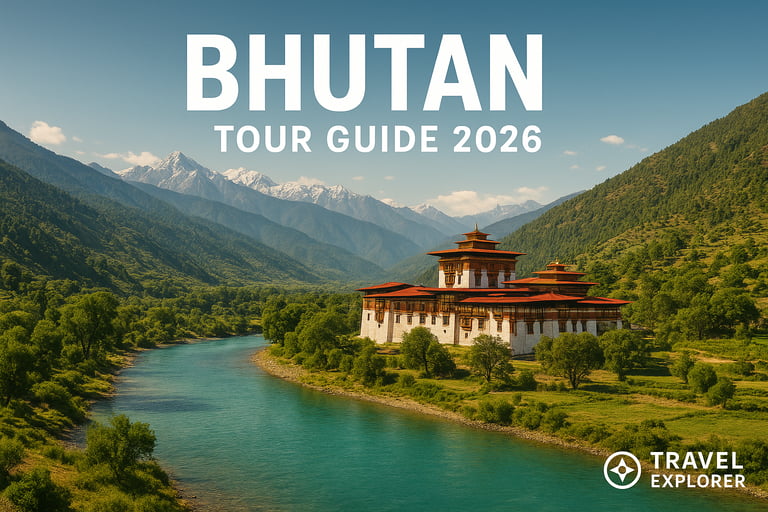
Punakha – Known for Punakha Dzong, one of Bhutan’s most beautiful fortresses, located at the confluence of two rivers. Don’t miss the Suspension Bridge nearby.
Phobjikha Valley – A serene glacial valley famous for Black-necked Cranes that migrate here in winter. Ideal for nature lovers.
Bumthang Valley – The spiritual heartland of Bhutan, dotted with ancient temples and monasteries like Jakar Dzong and Kurje Lhakhang.
Haa Valley – A hidden gem with untouched beauty, perfect for travelers seeking solitude and raw Himalayan charm.
6. Bhutanese Culture and Traditions
Bhutanese people are deeply spiritual, and Buddhism shapes every aspect of their life. The colorful festivals (Tshechus) are the best way to experience Bhutanese culture — featuring traditional dances, folk music, and elaborate costumes.
Local dress, called Gho (for men) and Kira (for women), is worn daily and adds to Bhutan’s charm.
Pro Tip: Always show respect at religious sites — walk clockwise around stupas and remove shoes before entering temples.
7. Bhutanese Cuisine – What to Eat
Bhutanese food is simple yet fiery.
Ema Datshi – Chili and cheese stew, Bhutan’s national dish.
Momos – Steamed dumplings stuffed with meat or vegetables.
Red Rice – Nutty and healthy, found in most Bhutanese meals.
Suja – Traditional butter tea served during ceremonies.
Travel Explorer Tip: Try Ara, a local rice wine, but remember it’s quite strong!
8. Adventure and Trekking in Bhutan
Bhutan is a paradise for trekkers. The pristine mountains and trails make it one of the best trekking destinations in Asia.
Famous Treks in Bhutan (2026):
Druk Path Trek – Between Paro and Thimphu; moderate and scenic.
Jomolhari Trek – High-altitude trek with breathtaking Himalayan views.
Snowman Trek – One of the world’s toughest and most rewarding treks.
For casual adventurers, try rafting in Punakha or mountain biking around Paro.
9. Shopping in Bhutan
Bhutan offers unique handicrafts and textiles made by local artisans.
Best buys include hand-woven fabrics, wooden masks, prayer wheels, Bhutanese stamps, and Thangka paintings.
Visit the Crafts Bazaar in Thimphu or Paro Market for authentic souvenirs.
10. Sustainable Travel and Etiquette
Bhutan takes pride in eco-tourism. Avoid plastic use, respect local traditions, and support small local businesses.
Travel Explorer Reminder: Always travel responsibly — Bhutan’s happiness depends on harmony with nature.
11. Estimated Travel Costs (2026 Update)
Accommodation – $50 to $150 per day.
Meals – $20 to $40 per day.
Entry Fees and Permits – $15 to $50.
Local Transport – $10 to $30.
SDF Fee – $100 per night for foreigners.
Budget Tip: Choose off-season months or travel in small groups to reduce per-person costs.
12. Bhutan Festivals in 2026
Thimphu Tshechu – September to October – Largest and most famous.
Paro Tshechu – March to April – Stunning mask dances at Paro Dzong.
Punakha Drubchen – February – Historical reenactments and celebrations.
Festivals reflect Bhutan’s deep connection to its Buddhist heritage — travelers should plan trips around these for the most vibrant experiences.
13. Where to Stay in Bhutan
From boutique hotels to luxury resorts, Bhutan offers all comfort levels.
Top Picks for 2026 include:
Six Senses Bhutan – Ultimate luxury experience.
Amankora Lodges – Elegant stays across multiple valleys.
Zhiwa Ling Heritage – Locally owned 5-star hotel in Paro.
For budget travelers, homestays in villages provide warm hospitality and authentic experiences.
14. Bhutan in 2026 – What’s New
Eco-friendly tourism policies with carbon-neutral travel certifications.
Improved road networks between Paro, Punakha, and Bumthang.
New cultural trails highlighting ancient monasteries and traditional villages.
Bhutan continues to grow as a destination that values happiness over commercialism — making it perfect for mindful travelers.
15. Final Thoughts
Bhutan isn’t just a place — it’s an emotion. The stillness of the mountains, the spirituality of the temples, and the warmth of its people make every traveler feel at home.
As Travel Explorer recommends, 2026 is an excellent year to visit Bhutan — less crowded, eco-conscious, and full of new cultural experiences. Whether you’re meditating at Tiger’s Nest or sipping butter tea in Thimphu, Bhutan will awaken your inner peace.
So pack light, travel mindfully, and let the Land of the Thunder Dragon fill your heart with happiness.
© 2026. All rights reserved.