
Which one you should Choose Hostel or Hotel? A Practical 2026 Guide for Smart Travelers
Confused between Hostel or Hotel? This 2026 travel guide compares price, privacy, safety, comfort, and who each option suits best.
1/27/20263 min read
Introduction: Travel in 2026 Has Changed the Rules
Travel in 2026 is not the same as it was even a few years ago. Remote work, digital nomads, budget airlines, long-term stays, solo travel, and experience-based tourism have completely changed how people choose accommodation. One question still dominates every traveler’s planning phase: should you stay in a hostel or a hotel?
This is no longer a simple budget vs luxury comparison. In 2026, hostels have private rooms, workspaces, cafés, and community events, while hotels offer long-stay discounts, smart rooms, and work-friendly setups. The right choice now depends on your travel purpose, personality, budget, safety needs, and expectations.
In this Travel Explorer deep dive, we break down hostels vs hotels in 2026, explaining every angle so you can make the smartest decision for your next trip.
Understanding the Core Difference
At the most basic level:
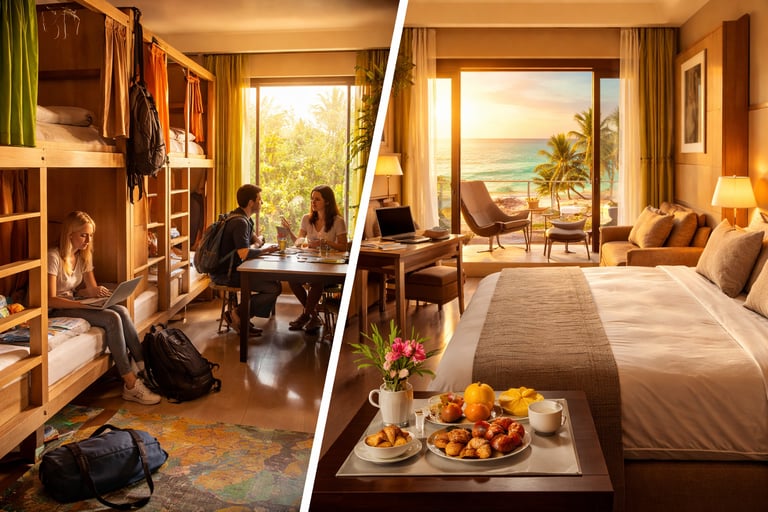
Hostels focus on shared experiences, affordability, and community
Hotels focus on privacy, comfort, and standardized service
But in 2026, this difference has blurred. Let’s explore how each option has evolved.
What Is a Hostel in 2026?
Hostels are no longer just cheap dorm beds with bunk beds and backpackers partying all night. Modern hostels in 2026 are hybrid social hubs.
Key Features of Modern Hostels
Dormitory rooms (4–12 beds)
Private rooms with ensuite bathrooms
Shared kitchens and lounges
Co-working spaces and fast Wi-Fi
Organized social events, tours, and meetups
Younger, international crowd (18–35 mostly)
Many hostels now brand themselves as “social stays”, designed to help travelers meet people, share stories, and save money.
What Is a Hotel in 2026?
Hotels have adapted aggressively to new travel patterns. They now cater not just to tourists but also to remote workers, digital nomads, couples, families, and business travelers.
Key Features of Modern Hotels
Private rooms with full amenities
Daily housekeeping
Room service or restaurant
Gym, spa, pool (depending on category)
Business centers and meeting rooms
Strong privacy and security
Hotels in 2026 are more flexible, offering weekly and monthly discounts, especially in travel hubs.
Cost Comparison: Hostel vs Hotel in 2026
Hostel Costs
Dorm bed: Very low
Private hostel room: Mid-range
Free or cheap extras (kitchen, events)
Hostels remain the cheapest accommodation option, especially for solo travelers.
Hotel Costs
Budget hotels: Affordable but limited
Mid-range hotels: Comfort + value
Luxury hotels: Expensive but premium
Hotels are more expensive overall, but price gaps shrink for long stays due to discounts.
Verdict on Cost
If budget is your priority, hostels win.
If comfort per rupee matters more, hotels offer better value for couples and families.
Privacy: The Biggest Deciding Factor
Hostel Privacy
Dorms offer almost no privacy
Shared bathrooms and common areas
Noise and differing schedules
Even private rooms in hostels often share walls and common spaces.
Hotel Privacy
Full personal space
Controlled environment
Quiet and predictable
Verdict on Privacy
If privacy matters, hotels are the clear winner.
If you’re comfortable sharing, hostels are fine.
Social Life and Meeting People
Hostels: Social by Design
Hostels are unmatched for:
Meeting fellow travelers
Group activities
Spontaneous plans
Cultural exchange
If you’re traveling solo in 2026, hostels make loneliness almost impossible.
Hotels: Social If You Try
Hotels are mostly private environments. Interaction is minimal unless:
You attend events
Stay in boutique or lifestyle hotels
Travel with companions
Verdict on Social Life
Want instant friends? Choose a hostel.
Prefer solitude or existing company? Choose a hotel.
Safety and Security in 2026
Hostel Safety
Lockers available but shared spaces exist
Depends heavily on management quality
Best for alert and experienced travelers
Hotel Safety
24/7 reception
CCTV, room locks, safes
Staff monitoring
Verdict on Safety
Hotels are safer by default, especially for:
First-time travelers
Families
Solo female travelers
Cleanliness and Hygiene Standards
Hostels
Depends on the hostel
Shared kitchens and bathrooms increase risk
Good hostels maintain strong cleaning schedules
Hotels
Daily housekeeping
Tighter hygiene protocols
More predictable standards
Verdict on Cleanliness
Hotels provide consistent cleanliness.
Hostels can be excellent but are hit or miss.
Comfort and Sleep Quality
Hostel Comfort
Bunk beds
Noise from roommates
Limited control over environment
Hotel Comfort
Quality mattresses
Noise control
Temperature control
Better bathrooms
Verdict on Comfort
If sleep quality matters, hotels are better.
Digital Nomads & Remote Work
Hostels for Remote Workers
Pros:
Community
Cheap long stays
Co-working areas
Cons:
Noise
Shared Wi-Fi
Limited privacy for calls
Hotels for Remote Workers
Pros:
Quiet rooms
Stable internet
Desk and lighting
Cons:
Isolation
Higher costs
Verdict for Digital Nomads
Short-term social work trips: Hostels
Long-term focused work: Hotels
Food and Cooking Flexibility
Hostels
Shared kitchens
Cook your own meals
Budget friendly
Hotels
Room service
Restaurant dining
Limited cooking options
Verdict on Food
On a budget? Hostels win.
Prefer convenience? Hotels win.
Families and Group Travel
Hostels
Limited family-friendly rooms
Not ideal for children
Shared environments
Hotels
Family rooms
Child-friendly services
Privacy and safety
Verdict for Families
Hotels are far superior.
Long-Term Travel and Slow Tourism
In 2026, slow travel is a major trend.
Hostels for Long Stays
Cheap
Social
Can become tiring over time
Hotels for Long Stays
Monthly discounts
Better routine
Mental comfort
Verdict for Long-Term Travel
Short long-stays: Hostels
Extended stays: Hotels
Cultural Experience and Local Feel
Hostels
Strong traveler culture
Less local immersion
International environment
Hotels
Can feel detached
Boutique hotels offer local flavor
Verdict on Culture
For traveler culture: Hostels
For local immersion: Hotels (especially boutique)
Sustainability and Eco Impact
Hostels
Shared resources
Lower per-person footprint
Often eco-focused
Hotels
Higher energy use
Eco-hotels are improving
Luxury hotels consume more
Verdict on Sustainability
Hostels are more eco-friendly overall.
Who Should Choose a Hostel in 2026?
Choose a hostel if you:
Travel solo
Are on a budget
Want to meet people
Enjoy social environments
Are young or young at heart
Prefer experiences over luxury
Who Should Choose a Hotel in 2026?
Choose a hotel if you:
Value privacy and comfort
Travel with family or partner
Work remotely full-time
Need rest and routine
Prefer predictable service
Want higher safety standards
Hostel vs Hotel: The Final Verdict
There is no universal winner.
Hostels win for social travel, affordability, and short adventures
Hotels win for comfort, safety, privacy, and long stays
In 2026, the smartest travelers don’t ask “Which is better?”
They ask “Which fits my trip?”
Travel Explorer Final Advice
For many travelers in 2026, the best approach is mixing both:
Start in a hostel to meet people
Switch to a hotel when you need rest
Travel smarter, not harder. Your accommodation should support your journey, not limit it.

© 2026. All rights reserved.