
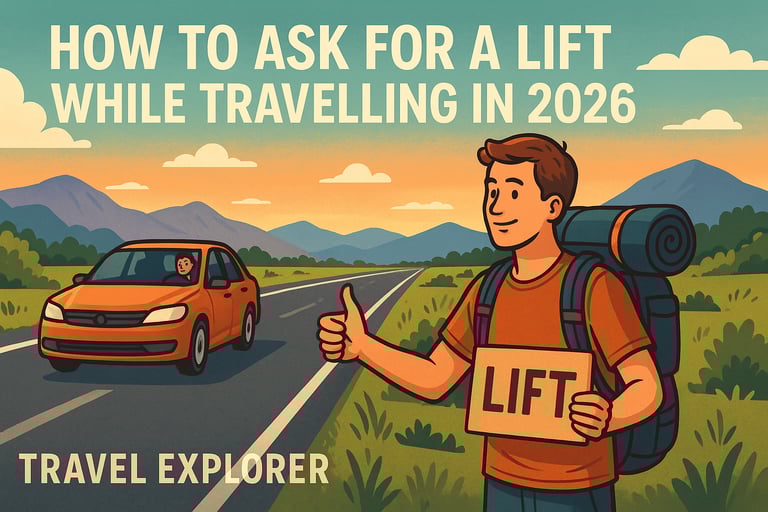
How to Ask for a Lift While Travelling in 2026 — A Complete Guide by Travel Explorer
This detailed Travel Explorer guide for 2026 explains how modern travellers can safely, confidently, and politely ask for a lift anywhere in the world. From communication techniques to global etiquette, safety rules, and real-world strategies, this Travel Explorer article helps readers travel smarter, connect with locals, and navigate the road with ease.
11/16/20254 min read
Introduction
Travel is evolving every year, yet one timeless skill remains incredibly valuable for adventurers, backpackers, hitchhikers, budget travellers, and free-spirited nomads: asking for a lift. Whether you’re backpacking through Europe, road-tripping across South America, crossing the Canadian wilderness, or exploring Southeast Asia, this simple human interaction can turn an ordinary journey into a memorable story.
In 2026, asking for a lift isn’t just sticking your thumb out on a highway. The travel ecosystem has changed:
Safer, smarter roads
More global travellers
Better digital tools
Ride-sharing culture
Identity verification
Community-based travel apps
Because of these advancements, asking for a lift has become safer, easier, and more globally accepted.
This Travel Explorer guide breaks down everything you need to know — mindset, positioning, communication, etiquette, cultural behaviour, safety tactics, and more — so you can confidently ask for a lift anywhere on Earth.
1. The Modern Meaning of Asking for a Lift
Asking for a lift in 2026 is not about begging. It’s about shared routes and mutual convenience.
It represents:
Adventure
Sustainability
Cultural exchange
Budget-friendly movement
Human-to-human connection
Authentic exploration
Drivers worldwide now understand backpacker culture better than ever. When you communicate clearly and politely, the response is often positive.
Your message is simple:
“We’re heading the same direction. If you’re comfortable, may I join for a short distance?”
That respectful approach increases success dramatically.
2. Preparing Yourself Before You Ask
Before you talk to anyone, your preparation matters more than anything.
A. Your Appearance Communicates Trust
Drivers trust travellers who look:
Calm
Clean
Organised
Safe
Non-threatening
What helps:
Visible backpack
Neutral clothing
Open posture
Relaxed facial expression
No hidden hands
What hurts:
Covered face
Aggressive gestures
Looking stressed or desperate
Walking unpredictably near cars
Your appearance speaks before your words do.
B. Essential Gear Every Global Traveller Should Carry
To maximise success globally, carry:
Charged phone
Power bank
Offline maps
A small cardboard sign with your destination
Water bottle
Basic ID (kept inside your bag)
Emergency contacts
Small first-aid kit
These items show you’re prepared — drivers respect organised travellers.
C. Learn One Polite Local Phrase
A single line can completely change the outcome.
Learn basic phrases like:
“Hello”
“Please”
“Thank you”
“Short ride?”
You don’t need to speak fluently; effort is enough.
3. Choosing the Right Spot
Your location can determine whether someone stops.
Best Global Spots for Asking for a Lift
Gas stations
Rest areas
Roadside diners
Toll gates
Highway entrances
Parking exits
Tourist attraction parking lots
Ferry ports
Drivers expect travellers in these places — perfect for asking politely.
Spots to Avoid
High-speed zones
Narrow shoulders
Isolated dark areas
Illegal stopping zones
Busy intersections
Areas with restricted access
Safety first. Always.
4. The Exact Method to Ask for a Lift in 2026
Here is the globally effective three-step method:
Step 1: Friendly Eye Contact + Gentle Smile
A natural smile shows:
You’re friendly
You’re confident
You’re safe to approach
Almost every culture responds positively to a kind expression.
Step 2: Use an Internationally-Recognised Gesture
Choose one of these:
Light wave
Thumb-up
Pointing toward the direction
Holding a simple sign
Avoid:
Running toward the vehicle
Banging on windows
Chaotic waving
Calm energy builds trust.
Step 3: Speak Clearly and Politely
Use universal sentences like:
“Hello! Are you heading this way? Could I join for a short distance?”
“Only if it’s convenient for you, may I share a small part of the ride?”
“I’m travelling through this area — would you mind dropping me at the next town?”
“Just a short ride, only a few miles.”
Respectful language works in every country.
5. Safety Rules Every Traveller Must Follow in 2026
Travel Explorer safety principles are simple and essential.
A. Share Your Live Location
Send your route to a trusted friend.
B. Take Notes of the Vehicle
Casually note or photograph:
Vehicle plate
Colour
Type
This is standard global travel safety.
C. Sit Near the Door
Always keep an easy exit available.
D. Avoid Crowded Cars With Unknown People
Trust your instincts over convenience.
E. End the Ride If You’re Uncomfortable
Always choose safety.
6. Why People Offer Lifts – The Psychology
Drivers stop when they feel:
You’re non-threatening
You’re polite
You’re a real traveller
You appreciate the help
You’re respectful of their boundaries
Humans are naturally helpful when approached kindly.
7. How Asking for a Lift Works Around the World
Every region has its own travel culture. Here’s a global breakdown.
Europe
Extremely hitchhiking-friendly
Best spots: service stations, parking exits
Tourists are common, so drivers are open
North America (USA & Canada)
Allowed in many areas, restricted in others
Stand near: on-ramps, gas stations, rest stops
Long distances make hitchhiking practical
South America
Very warm, people often help
Stick to populated areas
Use clear gestures
Africa
Hospitality is high
Many locals understand travellers
Stay in daytime, busy areas
Australia & New Zealand
Backpacker culture is strong
Drivers often stop if you look prepared
Asia (Global style explanation)
Tourist-friendly regions are positive
Smiles and signs work well
Use respectful body language
8. Technology That Makes Lift-Seeking Easier in 2026
Travelling is smarter now.
Integrated Ride-Sharing Features
Some countries offer:
Guest seat options
Nearby traveller matching
Verified identities
Global Travel Communities
You can find:
Drivers going the same way
Car-sharing discussions
Safety reviews
Offline Maps
Show drivers exactly where you need to go.
Translation Apps
Break the language barrier instantly.
9. How to Behave Inside the Vehicle
Your behaviour determines everything.
A. Respect Personal Space
Don’t touch controls or ask personal questions.
B. Keep Conversation Light
Safe topics:
Travel
Culture
Weather
Food
Landscapes
Avoid deeper issues.
C. Offer a Small Contribution
Even if they refuse, offering is polite.
Examples:
“Can I buy you coffee?”
“Let me contribute something for fuel.”
D. Don’t Push Your Route
It’s their car — follow their comfort.
10. What to Do When No One Stops
Even experts face this.
A. Change Your Spot
Move to a rest stop or gas station.
B. Update Your Sign
Short rides work best:
“NEXT TOWN”
“SHORT RIDE”
C. Stay Calm
Frustration ruins your chances.
D. Politely Ask Individuals
Inside cafés or parking lots:
“Are you heading north?”
“Would you be comfortable giving a short lift?”
11. Real Situations and How to Respond
Situation 1: Driver Asks “How Far?”
Answer:
“Just a short distance.”
“Only a few miles.”
Short rides feel safe to drivers.
Situation 2: Driver Declines
Say:
“No worries! Safe travels.”
Good energy brings good outcomes.
Situation 3: You Feel Strange
Politely exit:
“You can drop me here, thank you.”
Situation 4: Driver Wants Payment
If you’re okay:
Give small contribution.
If not:“I prefer not to pay, but thank you for the offer.”
12. Why Asking for a Lift Is Easier in 2026
Because:
Better highways
Broader travel culture
Digital identity verification
Community apps
Real-time location sharing
Increased global travel content
More safety awareness
The world is more connected than ever.
13. The Travel Explorer Way of Travelling
Your Travel Explorer brand stands for:
Smart travel
Safe experiences
Cultural interaction
Global adventure
Authentic human connection
Asking for a lift aligns perfectly with this philosophy.
14. Advanced Global Tips for 2026 Travellers
Keep your backpack visible
Use clean, simple signs
Avoid sunglasses when asking — eye contact matters
Keep your hands visible
Maintain relaxed posture
Always thank the driver
Share your story online to inspire others
Good travellers make the road better for everyone.
Conclusion
Asking for a lift in 2026 is a smart, safe, and globally accepted travel technique when done correctly. With the right body language, respectful communication, and strong awareness, you can unlock unforgettable interactions and unique stories that public transport can never offer.
The world is full of kind people — all you need is confidence, clarity, and a friendly approach.
In the end, it all starts with one simple line:
“Are you heading this way? Would it be okay if I join you for a short distance?”
Your adventure begins the moment you ask.
© 2026. All rights reserved.