
How to Do the Mount Kilimanjaro Trek in 2026 | Travel Explorer Complete Guide
A complete Travel Explorer guide on how to trek Mount Kilimanjaro in 2026. Learn routes, difficulty levels, costs, training tips, gear checklist, altitude safety, and everything you need for a successful summit.
AFRICA
11/26/20254 min read
How to Do the Mount Kilimanjaro Trek in 2026 | Travel Explorer Complete Guide
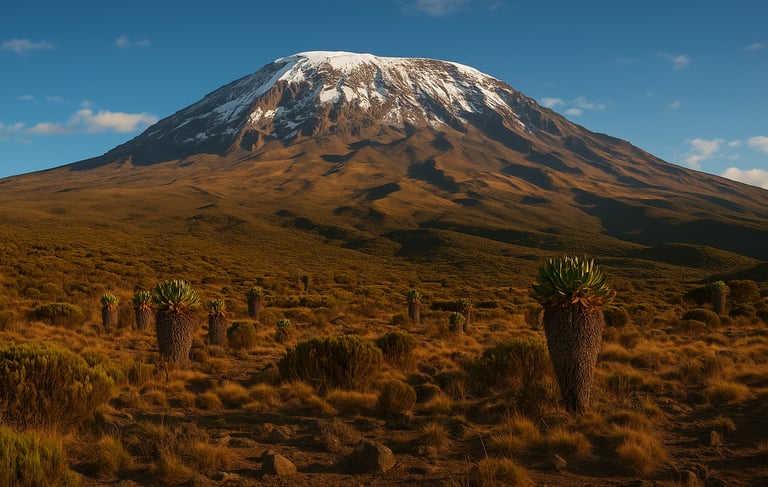
Mount Kilimanjaro is Africa’s highest peak and one of the world’s most iconic trekking destinations. Standing at 5,895 meters, Kilimanjaro is not just a climb—it's a life-changing journey that blends adventure, altitude, endurance, and some of the most stunning landscapes on earth.
The best part?
Kilimanjaro requires no technical climbing experience. You don’t need ropes, ice axes, or mountaineering skills. It’s a walk-up peak—BUT it demands mental strength, altitude awareness, physical fitness, and proper planning.
This Travel Explorer guide explains every single detail you need to trek Mount Kilimanjaro successfully in 2026.
1. Understanding Mount Kilimanjaro: What Makes It Unique
Kilimanjaro is located in Tanzania, and is the tallest free-standing mountain in the world.
What makes it unique:
You start in rainforests…
Walk through moorlands…
Cross alpine deserts…
And end at an icy glacier.
The changing landscapes make this trek one of the most unforgettable experiences on the planet.
Even though technical climbing isn't required, the altitude is the biggest challenge. Nearly 40% of trekkers fail due to altitude sickness, not physical weakness.
Travel Explorer recommends trekking slowly, hydrating well, and choosing the right route.
2. Best Time to Trek Kilimanjaro in 2026
There are two main trekking seasons that offer clear skies, mild weather, and safer conditions:
January to March
Cool, clear, fewer crowds.
June to October
Peak season, excellent weather, best success rate.
Avoid November (rain) and April–May (heavy rain).
3. Choosing the Right Route (Most Important Decision)
Kilimanjaro has 7 major routes.
Choosing the wrong one = failure.
Choosing the right one = high summit success.
Here are the best options:
A. Lemosho Route (8 days) — Best Overall Route
Success Rate: 90–95%
Difficulty: Moderate
Views: Stunning
Why Travel Explorer recommends it:
Slow ascent → best acclimatization → highest summit success rate.
B. Machame Route (7 days) — Most Popular
Success Rate: 80–90%
Difficulty: Moderate to Hard
Views: Incredible
Also called the “Whiskey Route” because it’s more challenging than the easier Marangu route.
C. Marangu Route (5–6 days) — Easiest for Beginners
Success Rate: 70–80%
Difficulty: Easy to Moderate
Famous for hut accommodations instead of tents.
Good for people who prefer comfort.
D. Rongai Route (7 days) — Less Crowded
Success Rate: 85%
Difficulty: Easy
Views: Less dramatic but very peaceful.
Travel Explorer Recommendation
If you want the highest success rate: Lemosho Route
If you want a balanced budget & views: Machame Route
If you want easier conditions: Marangu Route
4. Physical Fitness Required for Kilimanjaro
You don’t need to be an athlete, but you must be fit enough for multiple days of trekking.
Training Plan (6–8 weeks before trek):
3–4 days a week:
– 5–8 km brisk walking
– Uphill walking or stair climbing
2 days a week:
– Squats, lunges, leg strengthening
– Light jogging
Weekend:
– One long hike (10–15 km)
Remember:
The trek is 80% mental, 20% physical.
5. Altitude: The Real Challenge
Most people fail the Kilimanjaro trek not because they’re unfit, but because of altitude sickness.
At 5,000+ meters, your body struggles to adapt.
Symptoms include:
Headache
Fatigue
Nausea
Loss of appetite
Dizziness
How to prevent altitude sickness:
Walk slowly
Drink 3–4 liters of water daily
Choose an 8-day route
Take acclimatization days
Avoid alcohol
Take Diamox (only after doctor advice)
Travel Explorer tip:
The slower you go, the higher your chance of reaching Uhuru Peak.
6. How Much Does Kilimanjaro Trek Cost in 2026?
Kilimanjaro is not cheap because the park charges high fees and requires certified guides.
Average cost in 2026:
Budget package: $1,500 – $2,000
Mid-range: $2,200 – $3,000
Luxury: $3,500+
Cost includes:
Park fees
Guide + porters
Meals
Camping equipment
Transport
Accommodation before/after trek
Flights to Tanzania are extra.
7. Packing List for Kilimanjaro (2026 Updated)
You need proper gear because the temperature changes drastically.
Clothing:
2–3 dry-fit t-shirts
Thermal base layers
Fleece jacket
Down jacket
Waterproof jacket
Trekking pants
Wool socks
Warm gloves
Hat + balaclava
Good trekking shoes
Gear:
30–40L daypack
Sleeping bag (−10° to −15° C)
Trekking poles
Headlamp
Water bottles / hydration pack
Health & Misc:
Diamox (altitude)
Electrolytes
Sunscreen
Lip balm
Snacks
Power bank
Travel Explorer tip:
Do NOT compromise on shoes, jacket, and sleeping bag.
8. Day-by-Day Structure of a Kilimanjaro Trek
Every route has different camps but the structure is similar:
Wake up → Breakfast → Trek 5–7 hours → Lunch → Trek → Reach camp → Tea → Dinner → Sleep
Summit day is the toughest:
Start at midnight → Climb in darkness → Reach Uhuru Peak by sunrise → Descend the same day
12–15 hours of trekking in a single day is normal on summit night.
9. Food & Water on Kilimanjaro
Trekkers don’t have to cook.
Your crew cooks daily meals.
Food usually includes:
Soups
Rice
Pasta
Chapati
Veg stew
Eggs
Porridge
Snacks
Water is purified from streams daily.
Bring energy bars for extra calories.
10. Safety & Guides (Mandatory in 2026)
You cannot climb Kilimanjaro alone.
Guide + porter is mandatory.
Guides carry:
Oxygen cylinders
First aid
Pulse oximeter
They monitor your altitude levels daily.
Travel Explorer tip:
Choose a certified company with WFR-trained guides (Wilderness First Responder).
11. Accommodation During the Trek
There are two types:
A. Tents (Most routes)
Provided by the tour company.
Comfortable and weather-resistant.
B. Mountain Huts (Marangu route)
Basic but comfortable
No need to camp
Choose Marangu if you prefer beds over tents.
12. How Hard Is Kilimanjaro? (Realistic Difficulty)
Difficulty level: Moderate to Hard
Hard parts:
Cold temperatures
Long summit night
Altitude issues
Easy parts:
No technical climbing
Clear trails
Support team helping you
Mentally preparing yourself is key.
13. Training Your Mind (Most Underrated Part)
Kilimanjaro tests your patience more than your muscles.
To mentally prepare:
Accept slow pace
Expect headaches
Stay positive
Focus on one step at a time
Speak to your guides daily
Eat even when not hungry
Mental strength can take an average trekker to the top.
14. Common Mistakes That Make People Fail
Going too fast
Drinking less water
Wearing new shoes
Choosing short routes
Not taking guide advice
Ignoring altitude symptoms
Overpacking
Avoid these and your chances of success shoot up.
15. What It Feels Like to Reach Uhuru Peak
You see glaciers glowing in sunrise light.
You walk along snow-covered paths.
The sky turns golden.
And after days of endurance…
You touch the Uhuru Peak sign.
Most trekkers cry.
Some sit silently.
Some hug their companions.
It’s one of the most emotional travel moments possible.
Final Conclusion
Climbing Mount Kilimanjaro is a journey of discipline, patience, altitude awareness, and mental determination. With the right route, good preparation, slow trekking, and a positive mindset, anyone with average fitness can reach the summit in 2026.
Travel Explorer recommends:
Choose an 8-day route
Train for 6–8 weeks
Pack proper gear
Walk slowly
Hydrate well
Listen to your guides
Kilimanjaro is not just a trek — it’s a transformation.
For more adventure guides, budget tips, and global travel planning, always visit:
Travel Explorer
www.travelexplorer.info
© 2026. All rights reserved.