
Iran War Crisis 2026 Why Thousands of Flights Are Suddenly Cancelled — The Hidden Truth Behind Global Travel Chaos
Discover why the Iran war crisis is causing massive flight cancellations, airport closures, and travel chaos across the globe. Learn how geopolitical tensions, airspace shutdowns, and airline safety decisions are disrupting travel — and what affected passengers should do.
ASIA
3/2/20264 min read
The Hidden Truth Behind Global Travel Chaos
The world woke up to a new kind of fear — not just on the ground, but in the skies.
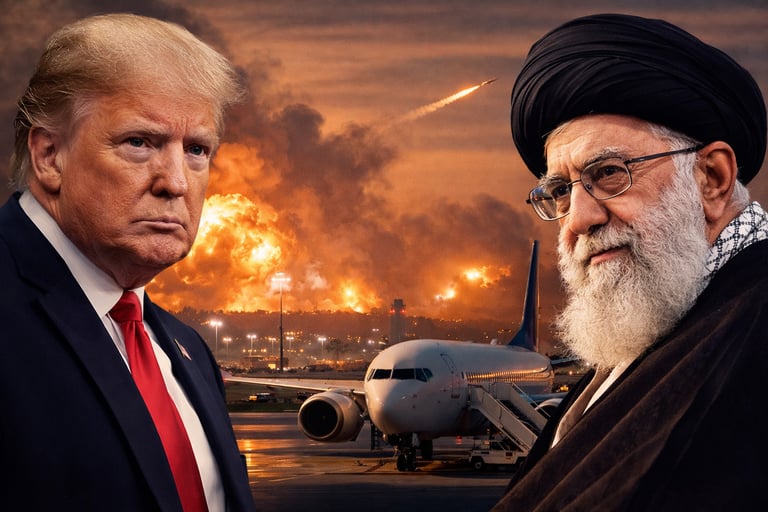
As tensions in the Middle East escalate due to the Iran war crisis, thousands of flights across Asia, Europe, and beyond are being cancelled or rerouted. Airports are crowded with confused passengers. Airline apps are sending unexpected cancellation alerts. Travel plans are collapsing overnight.
But why exactly are flights being cancelled?
Is it political pressure? Fuel prices? Airline panic?
The answer is deeper — and more serious — than most people realize.
Let’s break it down clearly.
The Sky Is No Longer Neutral Territory
When war breaks out, it doesn’t stay confined to borders. Modern warfare includes missiles, drones, radar disruption systems, and air defense operations. That means airspace itself becomes a battlefield.
Commercial aircraft normally fly through Middle Eastern corridors daily. These routes connect:
India to Europe
Asia to North America
Gulf hubs to Africa
Europe to Southeast Asia
The Middle East is one of the most critical aviation highways in the world.
But during active military conflict, that sky becomes unpredictable.
And unpredictability is the one thing aviation cannot tolerate.
Why Airlines Immediately Cancel Flights During War
Airlines operate on strict international safety protocols. The moment airspace becomes unstable, they must reassess risk.
Here are the primary reasons cancellations happen:
1️⃣ Airspace Closures
When governments declare their airspace unsafe, civilian aircraft cannot legally fly through it.
Several countries in the region have either:
Completely shut their airspace
Restricted certain flight levels
Issued emergency advisories
If a flight path crosses restricted territory, it must either:
Take a much longer detour
Be cancelled
Sometimes rerouting isn’t feasible due to fuel range, crew limits, or airport slot constraints. Cancellation becomes the only safe choice.
2️⃣ Missile and Drone Risk
This is the biggest reason — and the most serious.
In active conflict zones, missile systems and drones may operate near civilian corridors. Even if airlines attempt to avoid specific hotspots, the risk of:
Accidental targeting
Misidentification
Technical radar confusion
cannot be ruled out.
Modern air defense systems react fast. In high-tension moments, mistakes can be fatal.
Airlines simply cannot gamble with hundreds of passengers onboard.
3️⃣ Insurance and Financial Risk
Most people don’t realize this — but war changes aviation insurance overnight.
During conflict:
War-risk premiums skyrocket
Some insurers suspend coverage
Liability exposure increases
If a region becomes classified as high-risk, operating flights there may become financially impossible.
Even if airlines want to operate, insurance restrictions can force cancellations.
4️⃣ Crew Safety and Operational Limits
Pilots and crew have maximum duty hour limits. Rerouting around restricted airspace adds hours to flight time.
For example:
A 7-hour route could suddenly become 9 or 10 hours due to detours.
That affects:
Crew legality
Fuel calculations
Airport arrival slots
Aircraft rotations
One disrupted route creates a chain reaction across the entire airline schedule.
That’s how cancellations spread globally.
Why India Is Strongly Affected
If you're in India, you've probably noticed a sharp rise in cancellations to:
UAE
Qatar
Saudi Arabia
Kuwait
Oman
India has massive traffic to Gulf countries — for work, tourism, and business connections.
Additionally, many international flights from India to:
Europe
North America
pass through Middle Eastern air corridors.
When that corridor becomes unstable, the entire network shakes.
Delhi, Mumbai, Hyderabad, Bengaluru — all feel the ripple effect.
The Global Domino Effect
What surprises people most is this:
Even flights not directly going to the Middle East are getting cancelled.
Why?
Because aviation is interconnected.
When one aircraft gets delayed or rerouted:
It arrives late at its next destination
It misses its scheduled next departure
Crew timings are disrupted
Maintenance windows shift
One cancelled Gulf flight can lead to cancellations in Europe hours later.
This is a global web.
Pull one string — the whole system vibrates.
Ticket Prices May Rise — Here’s Why
Another consequence travelers are noticing:
Sudden increase in ticket prices.
Here’s why that happens:
Longer routes burn more fuel
Fuel prices rise due to regional instability
Fewer available seats due to cancellations
Higher operational insurance costs
Less supply + higher operating cost = higher fares.
If conflict continues, this could impact summer travel significantly.
Psychological Impact on Travelers
Beyond logistics, there is another factor — fear.
Even if certain airspace remains technically open, passengers hesitate.
People ask:
“Is it safe to fly?”
“What if the situation escalates mid-flight?”
Airlines monitor booking patterns closely. If demand drops sharply on certain routes, they may suspend them temporarily.
Perception sometimes shapes decisions as much as actual danger.
How Long Could This Last?
This depends on three key factors:
Duration of military escalation
Diplomatic negotiations and ceasefire efforts
Regional stability in surrounding countries
Even if fighting reduces quickly, airlines typically wait for:
Clear safety confirmations
Stabilized air defense operations
Reduced geopolitical tension
Restoring confidence takes time.
Travel disruption often lingers longer than headlines.
What You Should Do If Your Flight Is Cancelled
If you’re directly affected, stay calm and take structured steps:
✔ Check airline app notifications frequently
✔ Look for free rebooking options
✔ Compare alternate routes avoiding affected hubs
✔ Consider delaying non-urgent travel
✔ Monitor official travel advisories
Most airlines offer:
Full refunds
Free date changes
Alternate routing
But customer service lines may be overloaded — act quickly.
Is It Safe to Fly Right Now?
This is the question everyone asks.
Commercial aviation remains one of the most regulated industries in the world. Airlines do not take risks lightly.
If a flight is operating, it has:
Passed security and risk assessment
Been cleared through controlled airspace
Met insurance requirements
However, routes through high-tension zones will continue to face adjustments.
Safety remains the top priority — even if it disrupts your plans.
Bigger Picture: Why This Crisis Matters for Global Travel
This situation reveals something important:
Global travel depends heavily on geopolitical stability.
The Middle East sits at a strategic crossroads connecting continents. Any conflict there impacts:
Tourism
Trade
Aviation economics
Energy markets
The Iran war crisis is not just a regional issue.
It’s a global aviation event.
Final Thoughts
The sudden wave of flight cancellations isn’t random. It isn’t airline overreaction. It’s a calculated safety response to a volatile environment where civilian aircraft could face unpredictable threats.
When war reshapes the ground, it inevitably reshapes the sky.
For now:
Expect delays.
Expect higher fares.
Expect route changes.
But also remember:
Aviation history shows that once stability returns, travel normalizes faster than we expect.
Until then, stay updated, stay flexible, and prioritize safety over convenience.
© 2026. All rights reserved.