
Is Pahalgam Safe for Tourists in 2026? — A TravelExplorer Exclusive
A TravelExplorer exclusive guide exploring whether Pahalgam is safe for tourists in 2026 — covering the 2025 attack, new safety measures, current conditions, and travel tips for exploring this paradise responsibly.
ASIA
11/8/20256 min read
Introduction: The Paradise and the Pain
Pahalgam, one of Kashmir’s most breathtaking valleys, has always stood as a symbol of peace, beauty, and Himalayan charm. Known as the “Valley of Shepherds,” it has long been a favorite destination for Indian and international travelers seeking cool mountain air, green meadows, and the soothing flow of the Lidder River.
But in April 2025, tragedy struck when a terrorist attack in the region left 26 people dead — most of them tourists. It was one of the darkest days in Kashmir’s recent tourism history and sent shockwaves across India’s travel community.
Now, a year later, tourists are asking the same question: “Is Pahalgam safe to visit again?”
In this detailed TravelExplorer exclusive, we uncover what really happened, how the government responded, what changes have been made, and whether it’s truly safe to travel to Pahalgam in 2026.
⚠️ The 2025 Attack: What Really Happened
On April 22, 2025, gunmen stormed the popular Baisaran Valley area near Pahalgam and opened fire on a group of Indian tourists. Witnesses said the attackers targeted civilians, separating groups based on religion before shooting.
The attack shocked the nation and led to an immediate halt of tourism activities in the area. Investigations later revealed that the militants had infiltrated from across the border and carried out a planned strike to disrupt Kashmir’s booming tourism sector.
Immediate Aftermath:
The Jammu & Kashmir administration shut down over 50 tourist sites temporarily.
Security was heightened in Pahalgam, Gulmarg, and Sonamarg.
Tourist arrivals in Kashmir dropped by nearly 60% in the following weeks.
Major travel operators canceled packages until further review.
The tragedy painted a grim picture — but it also triggered the biggest security and tourism reform the region had seen in years.
🛡️ What Changed After the Attack
The government and local administration took decisive steps to restore peace, rebuild confidence, and ensure such an incident would never happen again.
1. Strengthened Security Network
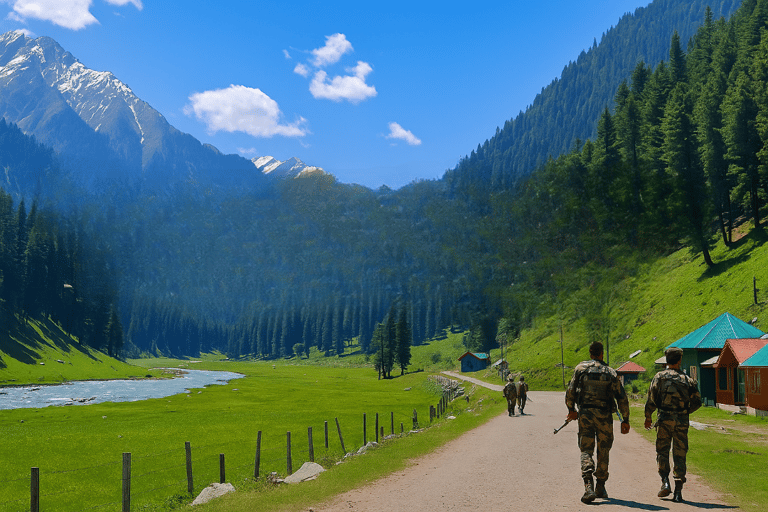
Security presence in tourist zones like Pahalgam has tripled since 2025. The area now features:
Regular police and CRPF patrols.
Quick response teams (QRTs) stationed at major points.
Drone surveillance and night watch systems.
Armed posts near hotel zones, riversides, and entry routes.
Checkpoints are now fully digital, scanning IDs automatically to maintain a record of visitors for safety.
2. Tourism Zone Reopenings
After months of review, the Jammu & Kashmir Tourism Department reopened tourist spots in a phased manner by late 2025. These included Betaab Valley, Aru, and Baisaran — but only after full security clearance.
Now in 2026, all major attractions are open again, and tour operators have resumed full-scale operations with new safety SOPs in place.
3. Hotel Safety Certification Program
In collaboration with local law enforcement, hotels and resorts in Pahalgam are now rated for safety and compliance. Visitors can check if a property is “Tourism Safety Certified (TSC)” — a badge introduced by the J&K government to ensure guest security and staff training in emergency response.
4. Emergency Connectivity & Health Access
Pahalgam’s emergency infrastructure has been overhauled:
The 24-hour tourist helpline (JKTourHelp) is now active.
Two trauma response centers have opened near the Lidder River route.
Police outposts are connected directly to the nearest army camp for rapid coordination.
🌿 The Present Situation in 2026
Fast-forward to 2026, and the mood in Pahalgam has changed completely.
Hotels are full again. Houseboats and trekking routes are active. Travelers once afraid to visit Kashmir are now returning — cautiously but confidently.
According to TravelExplorer field research, tourist numbers in Kashmir have risen by 30% compared to mid-2025. Pahalgam, being one of the main attractions, is again at the top of most itineraries.
🏞️ Why Travelers Still Love Pahalgam
Despite everything, Pahalgam remains an irresistible destination. Its magic is impossible to replicate anywhere else.
1. Natural Beauty That Heals the Soul
From the misty Aru Valley to the cinematic Betaab Valley, Pahalgam looks like a living painting. The Lidder River runs through emerald forests, with snow peaks glistening in the distance.
2. Adventure at Every Step
Pahalgam is a trekking base for trails leading to Kolahoi Glacier and Tarsar-Marsar Lakes. White-water rafting, trout fishing, and camping by the river have made a comeback in 2026.
3. Spiritual & Cultural Value
Pahalgam is the starting point of the Amarnath Yatra, one of India’s most sacred pilgrimages. Despite the 2025 incident, the Yatra was held successfully in 2026 under strict security measures, signaling restored faith.
4. Local Hospitality
The people of Kashmir are known for their warmth. Post-attack, locals have doubled down on efforts to make tourists feel welcome and protected.
🚨 Travel Safety Tips for Visiting Pahalgam in 2026
While Pahalgam is open and operating safely, travelers should still take smart precautions. Here are essential tips from TravelExplorer experts:
Book Official Tours Only — Use registered guides or government-approved agencies. Avoid unofficial tour operators.
Stay in Certified Hotels — Look for the Tourism Safety Certified badge.
Avoid Late-Night Travel — Stick to daylight hours when exploring remote valleys.
Stay Informed — Check government advisories before your trip.
Carry Emergency Numbers — Keep helpline contacts: Police (112), J&K Tourism (1800-890-7313).
Respect Local Customs — Modest dress and polite behavior go a long way in earning local respect.
Insurance is a Must — Opt for a travel plan that covers cancellation, evacuation, and medical emergencies.
Register with Hotel Security — Let them know your daily route if you plan treks or remote visits.
🕊️ Safety Improvements You’ll Notice
Travelers visiting Pahalgam in 2026 will notice several visible changes:
Security checkpoints are now located before key tourist zones like Betaab and Aru Valley.
Police tourism booths have been installed near the Lidder River and market areas.
Surveillance cameras cover every major hotel and taxi stand.
Private vehicle scanning is mandatory before entering main sightseeing points.
Most importantly, there is a new Tourist Police Unit exclusively for assisting travelers — friendly officers trained to handle visitor concerns in multiple languages.
🧭 Offbeat but Safe Spots Around Pahalgam
For those who want to explore beyond the main attractions, here are lesser-known but secure locations vetted by the Tourism Department in 2026:
Mamaleshwar Temple: Ancient Shiva temple known for peace and scenic surroundings.
Aishmuqam Shrine: Historical spiritual site offering panoramic valley views.
Lidderwat: Perfect for short treks; safe for guided groups.
Sheshnag Lake: A sacred high-altitude lake accessible during Amarnath season.
🧠 Insights from Locals & Experts
TravelExplorer interviewed local business owners, guides, and police officers to understand the ground reality.
Hotel Owner’s View:
“Security has never been tighter. We get routine patrols every few hours. We feel safer now than even before the attack.”
Local Guide’s Opinion:
“Tourists were afraid initially, but once they see the presence of forces and new arrangements, they relax. Nature’s beauty wins them back.”
Tourist Police Official:
“Our main mission is to protect visitors and rebuild trust. Pahalgam is safe — safer than people think.”
🌸 How 2026 Travelers Are Responding
Social media is full of travelers returning to Kashmir and posting pictures of Pahalgam’s snow valleys. Instagram travel reels and YouTube vloggers are calling it “the comeback destination of India.”
In 2026, influencers and backpackers have reignited interest in J&K tourism with hashtags like #SafeKashmir2026, #VisitPahalgam, and #RediscoverParadise.
💬 The Reality: How Safe Is “Safe”?
Let’s be clear — no region with past conflict can be declared 100% risk-free. However, the data in 2026 is promising:
Zero major incidents reported in tourist zones since April 2025.
More than 1.2 million tourists visited Kashmir in the first half of 2026.
Hotels in Pahalgam are reporting 80–90% occupancy.
So yes, while caution is wise, fear is no longer justified.
📊 The Economic & Emotional Comeback
The 2025 attack damaged not just property but also trust. Yet, 2026 has brought resurgence.
The tourism industry has rebounded with full strength. Locals say that the inflow of tourists this year feels “like pre-pandemic levels.”
Kashmir’s government has also invested ₹200 crore in tourism infrastructure and security training programs for hospitality staff, ensuring the valley’s tourism remains both beautiful and safe.
🏕️ Why You Should Still Visit Pahalgam
The Landscapes — Rolling meadows, pine forests, and icy rivers.
Adventure — Trekking, rafting, paragliding, and more.
Culture — Warm Kashmiri hospitality and heritage.
Healing Peace — Silence that rejuvenates the soul.
And most importantly — your visit supports local livelihoods. Each tourist helps families, artisans, and guides rebuild their lives after the 2025 setback.
🧳 TravelExplorer’s Smart Advice
If you’re planning to visit Pahalgam in 2026:
Stick to registered operators.
Inform family about your itinerary.
Carry identification at all times.
Stay aware, not anxious — most travelers return with unforgettable memories.
Remember: safety is a partnership between you and the destination.
✨ Conclusion
Pahalgam in 2026 is a story of resilience. It’s where nature’s beauty has outshined tragedy, and where people’s courage rebuilt faith in travel.
Yes, the 2025 attack was a dark chapter — but it is now firmly in the past. The government, locals, and tourism industry have turned that pain into progress.
So, is Pahalgam safe for tourists in 2026?
✅ Yes — absolutely, with awareness and smart travel planning.
Pahalgam remains one of India’s most stunning, soulful destinations. It has endured, evolved, and emerged stronger — ready to welcome the world again.
© 2026. All rights reserved.