
Norway Tour Guide 2026: The Complete Travel Explorer Edition
Plan your 2026 Norway trip with our full Travel Explorer guide! Discover breathtaking fjords, Northern Lights, Oslo’s hidden gems, scenic train rides, and the best travel tips for every season in Norway.
EUROPE
10/19/20257 min read
Introduction: Welcome to the Land of Midnight Sun and Fjords
Norway — a land that looks like it has been painted by nature itself. From the magical Northern Lights of Tromsø to the dramatic fjords of Bergen, Norway in 2026 continues to be one of the most desired destinations for world travelers. Its beauty lies in balance — between untouched nature and modern Nordic design, between Viking traditions and cutting-edge sustainability.
In this Travel Explorer guide, you’ll discover everything you need to know before visiting Norway in 2026 — including the best times to go, top cities to visit, what to eat, where to stay, and how to experience its world-famous fjords and Northern Lights. Whether you’re an adventurer, honeymooner, photographer, or simply someone looking for peace among nature, this guide will serve as your complete Norway blueprint.
Why Visit Norway in 2026
There are endless reasons to visit Norway, but 2026 makes it even more special. Norway has become a leader in sustainable tourism, promoting electric transportation, zero-waste hospitality, and eco-cruises across its breathtaking fjords. The government’s “Green Travel 2026” plan has made it easier for visitors to enjoy the country while leaving a minimal environmental footprint.
You’ll also find that solar activity in 2026 is at its peak, offering the most vivid Northern Lights displays in decades. The scenic train routes like Oslo to Bergen have been upgraded with panoramic glass windows, while fjord tours are now run by silent electric ferries for an even more serene experience. Add in world-class architecture, friendly locals, and the purity of Nordic nature — and it’s clear why Norway should be on your 2026 travel list.
Best Time to Visit Norway in 2026
Norway changes dramatically through the seasons, and the best time to visit depends on your travel goals.
Winter, from December to February, is magical. The nights are long, and the Northern Lights dance across the Arctic sky. Cities like Tromsø, Alta, and Kirkenes transform into winter wonderlands, offering snowmobile safaris, reindeer sledding, and ice hotels.
Spring, between March and May, is the rebirth of nature. Waterfalls are at their fullest, flowers begin to bloom, and there are fewer tourists. It’s the ideal time for hiking and photography.
Summer, from June to August, brings the famous Midnight Sun. Imagine daylight that lasts all night, lush green valleys, and countless festivals. This is also the best time for fjord cruises, scenic road trips, and camping.
Autumn, from September to November, offers fiery landscapes as forests turn orange and gold. It’s quieter, cheaper, and a perfect balance between summer’s energy and winter’s charm.
Travel Explorer recommends visiting between February and April if you want to experience both the Northern Lights and daylight adventures.
Top Cities to Visit in Norway 2026
Oslo, the capital, is where innovation meets tranquility. By 2026, Oslo has achieved its goal of becoming nearly emission-free, with electric buses, ferries, and bikes everywhere. You can explore the artistic Vigeland Sculpture Park, the modern Oslo Opera House, and the new MUNCH Museum dedicated to Edvard Munch. Don’t miss Aker Brygge, a waterfront lined with restaurants, bars, and shopping boutiques. For convenience, the Oslo Pass offers free access to public transport and many museums.
Bergen, known as the gateway to the fjords, is one of the most photogenic cities in Europe. Colorful wooden houses along Bryggen Wharf (a UNESCO World Heritage site) line the harbor, surrounded by seven mountains. In 2026, Bergen will host Fjordfest, celebrating sustainable tourism and Norwegian seafood. Take the Fløibanen Funicular for panoramic views, or go on an eco-friendly fjord cruise to Nærøyfjord.
Tromsø, far in the Arctic Circle, is a paradise for those chasing the Aurora Borealis. Beyond the Northern Lights, you can enjoy reindeer sledding, whale watching, and even stay at the stunning Tromsø Ice Domes — a hotel made entirely of ice and snow. During summer, Tromsø hosts the Midnight Sun Marathon, where runners compete under daylight at midnight.
Stavanger is Norway’s adventure capital, home to the legendary Pulpit Rock (Preikestolen), which towers 600 meters above Lysefjord. It’s a favorite for hikers and nature photographers. The nearby Kjeragbolten Boulder — a rock wedged between two cliffs — is another Instagram-famous spot.
Trondheim, Norway’s historical gem, offers a mix of medieval architecture and youthful energy. Explore the Nidaros Cathedral, Old Town Bridge, and the cozy Bakklandet district filled with cafes. Trondheim is also known for its vibrant student life and excellent music scene.
The Fjord Experience: Norway’s Natural Masterpiece
If there’s one reason people fall in love with Norway, it’s the fjords. These deep, glacier-carved waterways surrounded by cliffs are among the world’s most awe-inspiring natural wonders.
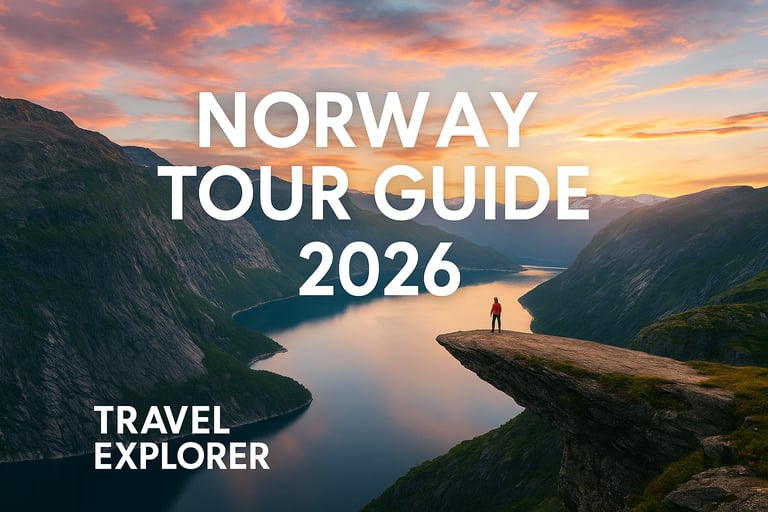
The Geirangerfjord, a UNESCO World Heritage site, is known for its stunning Seven Sisters waterfall. Nærøyfjord, one of the narrowest and most dramatic fjords, is ideal for quiet electric cruises. Sognefjord, stretching over 200 kilometers, is Norway’s longest fjord. Hardangerfjord offers fruit orchards, hiking trails, and the famous Trolltunga viewpoint. Lysefjord, with Preikestolen and Kjeragbolten, is the most adventurous of them all.
For 2026, Travel Explorer recommends purchasing the Fjord Cruise Pass — a new package that includes eco-friendly ferries across Bergen, Flåm, and Geirangerfjord at discounted prices.
Scenic Train Journeys – A Must-Do in 2026
Norway’s train routes are legendary. The Oslo-to-Bergen train, often called the most scenic in Europe, passes through mountains, glaciers, and waterfalls. The Flåm Railway, one of the steepest in the world, offers breathtaking views from every angle. The Dovre Line connects Oslo to Trondheim through lush valleys, while the Nordland Line crosses the Arctic Circle by rail.
In 2026, new eco-trains with glass roofs, Wi-Fi, and comfortable seating have made these journeys even more enjoyable. Booking early through Vy.no or the Travel Explorer app ensures you get the best views.
Norwegian Cuisine: What to Eat in 2026
Norwegian food has evolved beautifully, blending old traditions with modern sustainability. Seafood remains the heart of the cuisine — from salmon to cod and Arctic char. Must-try dishes include rakfisk (fermented trout), lutefisk (dried fish), fårikål (the national mutton and cabbage stew), brunost (sweet brown cheese), and kanelboller (cinnamon buns).
In 2026, Norway is seeing a wave of eco-gastronomy. Restaurants in Bergen and Tromsø offer farm-to-table menus, while Oslo’s electric food truck festivals serve sustainable street food. Arctic fine dining has become a trend — imagine reindeer steak served under the Northern Lights.
Where to Stay – Norway’s Best Hotels 2026
Norway’s hotels are as unique as its landscapes. The Thief in Oslo combines art, architecture, and luxury. The Juvet Landscape Hotel in Valldal offers glass cabins hidden in nature. In Flåm, Fretheim Hotel blends history with sustainability. For something magical, the Ice Hotel in Alta, rebuilt every winter, offers rooms made entirely of snow and ice.
For budget travelers, Scandic Hotels and Citybox offer affordable comfort in major cities. Airbnb cabins and traditional fisherman’s huts (called Rorbu) provide authentic local experiences. If you’re planning a summer trip in 2026, book early — eco-hotels fill up months in advance.
Budget Planning for Norway 2026
Norway is often seen as expensive, but smart planning can make it affordable. On average, mid-range travelers can expect to spend around $200 per day. Accommodation ranges from $100 to $250, meals from $40 to $80, and transportation about $20 to $50 daily.
Save money by buying travel passes like “Norway in a Nutshell 2026,” which includes trains, fjord cruises, and buses for a bundled discount. Cook occasionally, travel by train, and visit local markets instead of fancy restaurants. The quality of life and safety you experience will easily justify the price.
Getting Around Norway
Norway’s public transportation system is one of the world’s best. Trains, trams, and ferries run on time and are fully electric in major cities. Apps like Vy and Entur make it easy to plan and book your journeys.
If you prefer freedom, renting an electric car is an excellent choice. Charging stations are widespread, and driving through the fjords or mountain roads offers unforgettable scenery. For long coastal routes, Hurtigruten’s 2026 emission-free cruises are a luxurious and sustainable way to travel.
Essential Travel Apps and Connectivity
Norway is highly digitalized, and almost every service has an app. Vy App handles trains and buses; Entur covers local transport planning. Aurora Forecast helps track the Northern Lights. The Travel Explorer app provides a full Norway 2026 map, eco-hotel directory, and local attractions. English is widely spoken, but Google Translate is useful for small towns. Wi-Fi is available almost everywhere — even on buses and ferries.
The Northern Lights in 2026
One of the most powerful solar cycles in decades makes 2026 the perfect year to witness the Northern Lights. The best locations are Tromsø, Alta, the Lofoten Islands, and Svalbard. The ideal months are from late September to early April.
For an unforgettable experience, stay in an Aurora Dome — transparent igloos designed to let you watch the sky dance in green and pink hues while you relax inside. The calm and silence of the Arctic night create an experience that words can hardly describe.
Adventure Activities in Norway
Norway is a dream come true for adventure seekers. You can hike Trolltunga, Preikestolen, or Romsdalseggen; kayak through Geirangerfjord; ski in Hemsedal; or go whale watching in Andenes. Dog sledding and snowmobiling in Tromsø’s Arctic wilderness are unforgettable. Summer brings opportunities for paragliding, fishing, and glacier walking.
Every adventure in Norway is supported by professional guides and top-notch safety standards. Travel Explorer recommends booking guided tours for difficult hikes or Arctic activities.
Cultural Etiquette and Local Tips
Norwegians are polite, reserved, and highly respectful of nature. Always greet with a smile, and don’t interrupt conversations. Public littering or disturbing wildlife is frowned upon. Tipping isn’t mandatory but rounding up the bill is appreciated. Credit cards are accepted almost everywhere, and cash is rarely needed.
When hiking, follow the principle of “Allemannsretten” — the right to roam responsibly. It allows everyone to enjoy nature freely, as long as they respect the environment and private property.
Final Thoughts: Norway 2026 Awaits
Norway in 2026 isn’t just a travel destination — it’s an experience that transforms how you see the world. It’s a country where nature reigns supreme, where technology harmonizes with tradition, and where every moment feels pure and meaningful.
Whether you’re standing on the edge of Trolltunga, cruising through the fjords, or watching the Aurora Borealis light up the sky, Norway promises to leave you speechless. With sustainability, hospitality, and adventure at its heart, this is your perfect year to explore the North.
As Travel Explorer says — “The best journeys are not measured in miles, but in moments that stay forever.”
© 2026. All rights reserved.