
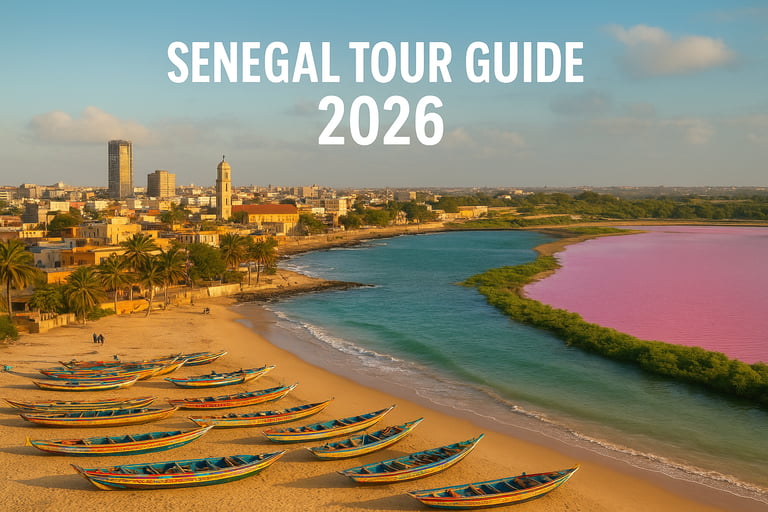
Senegal Tour Guide 2026 – Discover Africa’s Hidden Gem with Travel Explorer
Explore Senegal in 2026 with our complete travel guide! From Dakar’s lively streets to Saint-Louis’ colonial charm and Casamance’s tropical beauty — Travel Explorer brings you the ultimate adventure in West Africa’s most culturally rich destination.
AFRICA
10/14/20255 min read
Introduction: Welcome to Senegal – The Soul of West Africa
Senegal, the westernmost point of Africa, is a country where culture, music, and history blend beautifully with nature’s raw beauty. Known for its vibrant cities, golden beaches, welcoming people, and rich traditions, Senegal has become one of Africa’s top travel destinations for 2026.
Whether you’re exploring the lively markets of Dakar, walking through the pink waters of Lake Retba, or enjoying a peaceful evening along the Atlantic coast — Senegal offers travelers a once-in-a-lifetime experience that combines adventure, heritage, and relaxation.
With Travel Explorer, here’s your complete guide to exploring Senegal in 2026 — from top attractions and best beaches to travel tips, cuisine, and local culture.
1. Why Visit Senegal in 2026?
Senegal is more than just a tourist destination — it’s a place where African energy and French influence meet in perfect harmony. In 2026, the country continues to expand its tourism infrastructure, making it easier for international visitors to explore without losing its authentic charm.
Stability & Safety: Senegal remains one of the most politically stable and peaceful countries in West Africa.
Cultural Diversity: Home to multiple ethnic groups including Wolof, Serer, and Fula, Senegal’s diversity gives visitors an immersive cultural experience.
Natural Wonders: From the pink Lake Retba to the wild Casamance forests and sandy coasts, the landscape is breathtaking.
Music & Dance: The rhythms of Mbalax and the sound of drums in Dakar’s nightclubs are simply unforgettable.
2. Best Time to Visit Senegal
Senegal has a tropical climate, with dry and wet seasons.
Dry Season (November to May): Ideal for travel — sunny skies, cool winds, and perfect beach conditions.
Wet Season (June to October): Lush landscapes and fewer crowds, though some rural roads can become difficult to travel.
Best Months: December to April — for comfortable temperatures, clear beaches, and cultural festivals.
3. Top Destinations in Senegal
a. Dakar – The Heartbeat of Africa
Senegal’s capital, Dakar, sits on the Cape Verde Peninsula. It’s a city full of life — with music in the streets, art in every corner, and the ocean always nearby.
Visit Gorée Island, a UNESCO World Heritage site that tells the story of the Atlantic slave trade.
Explore African Renaissance Monument, Africa’s tallest statue overlooking the ocean.
Don’t miss Sandaga Market, perfect for colorful textiles, local spices, and souvenirs.
b. Saint-Louis – The Old Colonial Jewel
Once the capital of French West Africa, Saint-Louis is known for its old bridges and colonial architecture.
Take a stroll along the Faidherbe Bridge, designed by Gustave Eiffel’s firm.
Visit during the Saint-Louis Jazz Festival — one of Africa’s most famous music events.
c. Lake Retba (Lac Rose) – The Pink Lake
Just an hour from Dakar, this lake is world-famous for its pink hue caused by algae. Float on its salty waters, take pictures, and explore nearby salt harvesting villages.
d. Casamance – Senegal’s Green Paradise
Located in the south, Casamance offers a completely different environment — tropical forests, river deltas, and palm-lined beaches.
Visit Cap Skirring, a laid-back coastal town ideal for relaxation.
Explore local Diola villages to experience Senegal’s rural culture and cuisine.
e. Niokolo-Koba National Park
A UNESCO World Heritage Site, this vast park is home to elephants, lions, hippos, and hundreds of bird species. It’s one of Africa’s most beautiful wildlife destinations.
4. Senegalese Culture and People
Senegal’s motto is “Teranga,” meaning hospitality — and you’ll feel it everywhere. The people are warm, welcoming, and proud of their traditions.
Music: Senegal is home to the legendary Youssou N'Dour, whose Mbalax style combines traditional drumming with modern beats.
Dance: The sabar drum dances are lively and energetic, often performed during community celebrations.
Religion: Islam is the dominant faith, practiced peacefully alongside other religions, adding to Senegal’s sense of unity.
5. Food and Cuisine in Senegal
Senegalese food is a delightful experience full of flavor and history.
Thieboudienne: The national dish made of fish, rice, and vegetables.
Yassa: Chicken or fish marinated in lemon and onions.
Maafe: Peanut-based stew served with rice or couscous.
Bissap: A refreshing hibiscus flower drink found everywhere.
If you love food tourism, Senegal is heaven — especially in local restaurants or maquis where meals are served with love.
6. Beaches and Nature Escapes
Senegal’s coastline stretches nearly 500 km along the Atlantic Ocean.
Ngor Island: Just off Dakar, a peaceful escape for swimming and surfing.
Yoff Beach: Known for kite surfing and fishing boats called pirogues.
Saly: A popular resort town offering luxury stays, casinos, and nightlife.
Cap Skirring: Ideal for romantic getaways and sunsets.
Nature lovers will also enjoy birdwatching in the Djoudj National Bird Sanctuary, home to flamingos and pelicans.
7. Adventure and Outdoor Activities
Senegal is perfect for both thrill-seekers and eco-travelers.
Surfing: The waves of Ngor and Yoff attract surfers worldwide.
Safari: Go wildlife watching in Niokolo-Koba or Bandia Reserve.
Kayaking: Paddle along the Sine-Saloum Delta’s mangrove forests.
Hiking: Explore Casamance’s trails through lush jungles and villages.
8. Festivals and Events in 2026
Senegal loves to celebrate. Festivals bring people together through music, art, and tradition.
Saint-Louis Jazz Festival: A must for music lovers (May 2026).
Dak’Art Biennale: Africa’s largest contemporary art exhibition (May-June 2026).
Gorée Diaspora Festival: Celebrating African heritage and global unity.
Tabaski (Eid al-Adha): A time of family, feasts, and generosity.
9. Shopping and Local Crafts
Senegal is famous for its handmade crafts — each piece tells a story.
Markets in Dakar: Shop for colorful fabrics, woven baskets, wooden carvings, and jewelry.
Village Artisans: Support local artists by buying traditional instruments and masks.
Leather & Beads: Found in the streets of Saint-Louis and Casamance.
Bargaining is part of the fun — just remember to do it respectfully!
10. Transportation and Getting Around
Flights: Blaise Diagne International Airport (DSS) connects Dakar to global destinations.
Taxis: Affordable but always agree on price first.
Buses & Car Rapides: Iconic colorful minibuses that serve as cheap, fun transport.
Car Rentals: Available for long trips or exploring Casamance.
Travel Tip: Domestic flights to Casamance can save time, especially during rainy months.
11. Accommodation – Where to Stay
Senegal offers options for all budgets:
Luxury Resorts: Radisson Blu Dakar, The Rhino Resort (Saly).
Mid-Range Hotels: Hotel de l’Ocean, Sunugal Village.
Budget Hostels: Maison Abaka, ViaVia Dakar.
Eco-Lodges: Campement du Niambour (for authentic rural stays).
Booking ahead is recommended, especially during festivals or dry season.
12. Travel Tips for 2026
Currency: West African CFA Franc (XOF).
Language: French is official; Wolof widely spoken.
Visa: Many nationalities get visa-free entry for up to 90 days.
Health: Yellow fever vaccination may be required; carry mosquito repellent.
Connectivity: SIM cards are cheap — Orange and Free Senegal offer good coverage.
Safety: Senegal is safe for travelers; avoid isolated areas at night as a precaution.
13. Sustainability and Responsible Tourism
Travel Explorer recommends traveling responsibly:
Respect local customs and dress modestly in villages.
Support community-based tourism and local artisans.
Avoid plastic bottles — carry a refillable one.
Learn a few words of Wolof to connect with locals — it goes a long way!
14. Budget and Expenses
Average Daily Budget (2026):
Budget Travelers: $40–60/day
Mid-Range: $80–120/day
Luxury: $180+/day
Example Costs:
Street food meal: $3–5
Local beer: $2
Hotel night: $50–150
Taxi (city): $5–10
Senegal offers value for money — luxury experiences at reasonable prices.
15. Final Thoughts – The Spirit of Teranga
Senegal isn’t just a destination — it’s a feeling. It’s the rhythm of the drums at sunset, the laughter of fishermen on the coast, the colors of markets, and the endless warmth of its people.
In 2026, Senegal stands as Africa’s shining example of how tradition and modernity can coexist beautifully. Whether you’re a history buff, an adventurer, or someone simply seeking peace by the ocean — Senegal welcomes you with open arms.
As Travel Explorer reminds every traveler: “Don’t just visit Senegal — feel it, live it, and let its spirit stay with you forever.”
© 2026. All rights reserved.