
The Rise of Exploitative Tourism in the Philippines: A 2026 Sociological Perspective
As tourism booms in Southeast Asia, the Philippines faces a rising challenge — exploitative tourism. Travel Explorer analyzes the social, economic, and ethical factors behind this 2026 phenomenon and what’s being done to stop it.
ASIA
11/11/20256 min read
The Rise of Exploitative Tourism in the Philippines: A 2026 Sociological Perspective
The Philippines, with its white-sand beaches, warm hospitality, and rich cultural heritage, has long been one of Asia’s most beloved travel destinations.
But in 2026, a growing concern shadows its tourism boom — the rise of exploitative or “sex-driven” tourism, where travel motives extend beyond leisure and cultural experience into ethically grey areas.
While this issue isn’t unique to the Philippines, the country’s rapid post-pandemic tourism growth, combined with persistent economic inequality, has made it a focal point for global debate.
This Travel Explorer report explores why exploitative tourism is rising, what socio-economic forces fuel it, and how local communities and policymakers are responding to protect the integrity of Filipino tourism and dignity.
1. The Tourism Rebound After the Pandemic
When international borders reopened in 2023, Southeast Asia witnessed an unprecedented tourism revival.
The Philippines, eager to rebuild its economy, rolled out aggressive travel campaigns:
“Love the Philippines” (Department of Tourism, 2023)
Tax incentives for hotel and resort expansion
Easier visa-on-arrival programs for foreign nationals
By 2025, the Philippines recorded over 7 million foreign tourist arrivals — nearly double its 2019 levels.
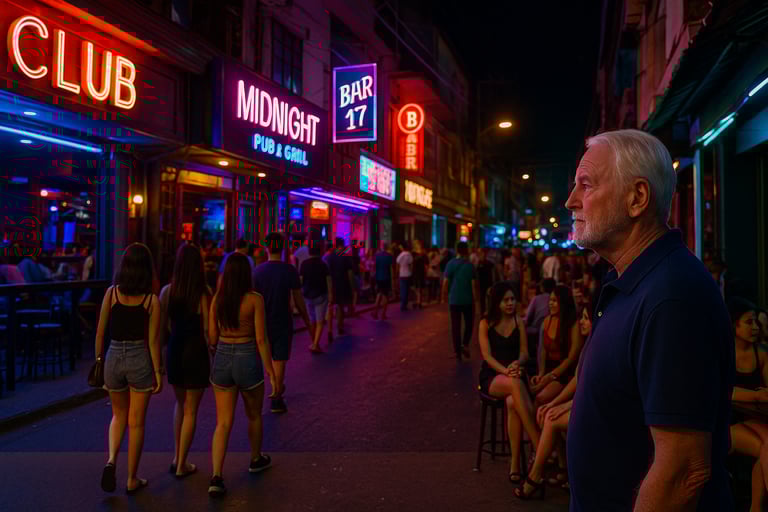
While this revival boosted jobs and local income, it also reopened the door to a darker side of tourism that thrives in areas with rapid economic imbalance — particularly in parts of Cebu, Angeles City, and some districts of Manila.
2. Understanding Exploitative Tourism
“Exploitative tourism” refers to travel motivated by economic or social inequality, where visitors use financial privilege to seek unethical or exploitative experiences.
In the Philippine context, it manifests in several forms:
Transactional relationships driven by poverty and dependence.
Foreign “romance tourism” involving older travelers seeking companionship.
Digital-era exploitation, where social media blurs the line between travel content and exploitation.
It’s crucial to clarify: not all forms of nightlife tourism are exploitative.
However, when financial inequality and desperation become the foundation of human interaction, it shifts from cultural exchange to exploitation.
3. Economic Factors: Tourism and Inequality
The Philippines has one of Southeast Asia’s fastest-growing economies — yet, as of 2026, nearly 20% of its population still lives below the poverty line.
Tourism hubs like Cebu, Angeles, and Manila attract millions of visitors annually, but most revenue stays with corporations, not local communities.
Key Factors Driving the Problem
Low wages in hospitality: Many resort employees earn less than $12 per day.
Job insecurity: Seasonal work drives locals to find alternative income streams.
Dependence on foreign spending: Tourists often hold far greater purchasing power than locals.
In this imbalance, tourism becomes survival, not just business.
For some, engaging in transactional relationships or nightlife-oriented work becomes an economic necessity.
4. Cultural Dynamics and Perceptions
The Philippines’ unique blend of Asian and Western influences shapes how relationships and tourism intersect.
Centuries of colonial influence and modern media portrayals have created complex power dynamics between Western visitors and Filipino locals.
In many tourist cities, locals see foreigners as symbols of wealth and opportunity.
Meanwhile, some visitors view the Philippines as a place of romance, escape, and indulgence.
This dual perception — admiration mixed with exploitation — fuels the ongoing cycle.
As one Filipino sociologist explained to Travel Explorer:
“Tourism in the Philippines reflects both aspiration and inequality. The same smile that welcomes guests sometimes hides economic struggle.”
5. The Digital Age: Social Media’s Role
Social media has transformed global tourism — but not always for the better.
Influencers and vloggers frequently portray the Philippines as a “paradise” where everything is cheap and accessible.
While this boosts travel numbers, it also encourages entitlement-based tourism, where visitors forget cultural boundaries.
Platforms like YouTube and TikTok are filled with “Philippines nightlife” or “dating in Cebu” videos — often blurring entertainment with exploitation.
The Problem with Digital Normalization
It romanticizes inequality, turning poverty into aesthetic “local flavor.”
It attracts visitors for the wrong reasons — curiosity rather than cultural respect.
It amplifies power imbalances, framing Filipinos as “friendly” but not equal.
The result? A rise in exploitative behavior disguised as cultural curiosity.
6. The Impact on Local Communities
Beyond moral debates, exploitative tourism deeply affects Filipino communities.
A. Economic Distortion
When an area becomes known for exploitative tourism, it warps the local economy.
Land prices rise, small businesses are replaced by bars or adult entertainment venues, and traditional crafts lose value.
B. Social Stigma
Communities near these hotspots face collective stereotyping.
Locals are judged not as individuals, but through the lens of outsiders’ assumptions.
This stigma particularly affects women and younger workers, who face judgment regardless of their involvement.
C. Generational Impact
Children growing up in such environments are often caught in a cycle where economic opportunity is tied to tourism dependence rather than education or innovation.
As one social worker in Angeles City told Travel Explorer:
“We are grateful for tourism jobs. But when it becomes our only option, it stops being empowerment — it becomes survival.”
7. Government and Policy Response
Recognizing the growing ethical issues, the Philippine Department of Tourism (DOT) and Department of Justice have introduced several 2025–2026 reforms.
Policy Actions Include:
Tourism Code Update (2025): Adding “ethical conduct clauses” for tour operators.
Local Licensing Reforms: Bars and clubs near schools and residential zones face stricter licensing.
Digital Regulation: Crackdowns on exploitative online travel content promoting nightlife tourism.
Community Education: Programs teaching locals about financial literacy and employment alternatives.
Collaboration with NGOs
Organizations like ECPAT Philippines, Bantay Bata Foundation, and Plan International are working with hotels and transport operators to identify and report exploitative activities.
While enforcement remains inconsistent, awareness and cooperation have significantly increased by 2026.
8. Ethical Travel: What Responsible Tourists Can Do
Ethical travel means enjoying a destination without exploiting its people or resources.
Here’s how responsible travelers can help shift the culture in the Philippines:
1. Support Local, Ethical Businesses
Book with verified tour companies, family-run hotels, and local restaurants.
Ensure your money contributes to community well-being, not exploitative industries.
2. Avoid Normalizing “Cheap Indulgence”
Respect that what feels inexpensive to a visitor may represent a week’s earnings to a local.
Avoid boasting about affordability — it can perpetuate power gaps.
3. Be Culturally Aware
Understand Filipino social norms. Respect dress codes, privacy, and personal boundaries.
Learn basic Tagalog phrases — small gestures go a long way.
4. Report Exploitative Practices
If you witness exploitation or unethical conduct, report it to authorities or organizations like the Department of Tourism Hotline (117).
5. Travel With Purpose
Engage in cultural immersion, volunteer tourism, or eco-travel initiatives that empower local communities rather than exploit them.
9. Education and Awareness: Changing Mindsets
Long-term change requires education, not just policy.
Local schools, community centers, and tourism institutes across the Philippines have begun integrating “ethical tourism awareness” modules, teaching students how to:
Identify and reject exploitative practices.
Promote sustainable, community-based tourism.
Value Filipino culture and dignity over economic desperation.
By 2026, several universities — including Ateneo de Manila, University of the Philippines, and Cebu Normal University — have launched academic programs on Tourism Ethics and Social Responsibility.
This marks a cultural shift: from survival tourism to value-driven tourism.
10. Global Perspective: Why It Matters to Everyone
Exploitative tourism in the Philippines isn’t just a local problem — it’s a mirror of global inequality.
When tourists from wealthier nations visit developing countries with unchecked privilege, the power imbalance often manifests as exploitation — economic, social, or emotional.
But the same system can be changed if travelers embrace ethical responsibility.
The Philippines, with its hospitality and resilience, deserves tourism that uplifts, not undermines.
As a Travel Explorer editorial noted in early 2026:
“Tourism should not be about what money can buy, but what respect can build.”
11. Hope on the Horizon: The New Face of Filipino Tourism
Amid challenges, hope is rising.
The Philippines is witnessing a strong grassroots tourism movement that promotes ethical, inclusive, and sustainable travel experiences.
Emerging Trends (2026)
Community-Based Eco-Tourism: In Bohol and Palawan, locals run eco-tours emphasizing environment and culture.
Women-Led Tourism Initiatives: Female entrepreneurs are opening homestays and craft businesses that empower their communities.
Digital Storytelling: Young Filipino creators are countering exploitative narratives by showcasing authentic, respectful travel experiences online.
This is the real Philippines — not the nightlife stereotype, but a nation of creativity, resilience, and kindness.
12. Travel Explorer Reflection: Rebuilding Trust and Respect
By 2026, the Philippines stands at a crossroads.
Its beaches still dazzle, its culture still charms, and its people still welcome — but global perception needs repair.
Rebuilding that trust requires effort from three sides:
The Government — enforcing policies that protect people and ethics.
The Industry — promoting sustainable, dignified tourism.
The Traveler — understanding that respect is the truest form of appreciation.
Because at its heart, tourism isn’t just about escape — it’s about connection.
And connection cannot exist without equality.
Conclusion: Towards a More Ethical Tomorrow
The rise of exploitative tourism in the Philippines is not simply a scandal — it’s a wake-up call.
It reveals what happens when rapid economic growth outpaces social education and ethical awareness.
But it also shows the potential for transformation — from exploitation to empowerment.
The Philippines has everything the world admires — natural beauty, warmth, and heart.
If global travelers and local leaders work together, the country can redefine what tourism means in Southeast Asia.
Not a place of indulgence — but a place of mutual respect, fairness, and dignity.
Because the true beauty of the Philippines isn’t found in beaches or bars —
it’s found in its people.
And they deserve to be seen, respected, and valued beyond price.
© 2026. All rights reserved.