
Top 10 Shocking Travel Scams in India 2026 Every Tourist Must Avoid | Travel Explorer
Traveling to India in 2026? Learn about the top 10 most common tourist scams in India and how to avoid them. Top 10 Shocking Travel Scams in India 2026 Every Tourist Must Avoid . A complete safety and awareness guide by Travel Explorer for smart travelers.
ASIA
1/9/20262 min read
Top 10 Shocking Travel Scams in India 2026 Every Tourist Must Avoid
India remains one of the most exciting travel destinations in 2026. From ancient temples and vibrant markets to modern cities and spiritual retreats, the country attracts millions of tourists every year. However, like any popular destination, India also has its share of scams that specifically target foreign travelers.
This Travel Explorer guide will help you understand the most common scams, how they operate, and how you can avoid falling into them—so you can enjoy India safely and confidently.
1. The “Government Office Is Closed” Scam
This is one of the oldest and most common scams faced by tourists.
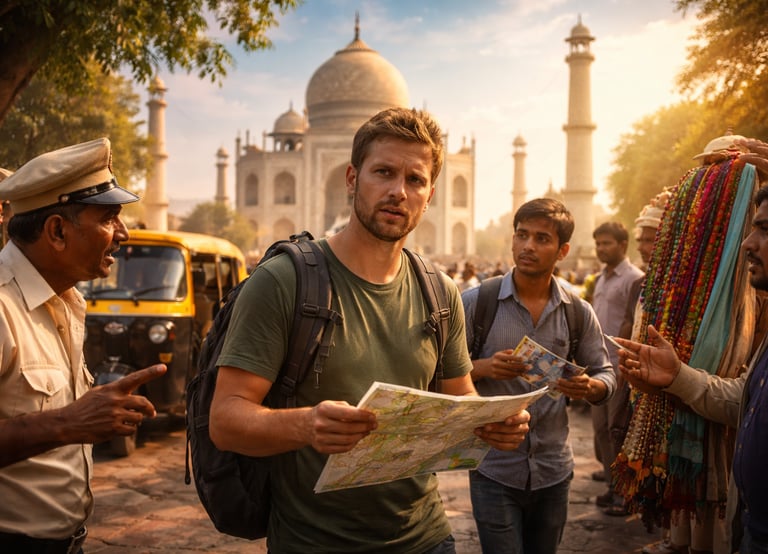
Scammers approach travelers near railway stations, embassies, or tourism offices and claim that the office is closed due to a holiday or strike. They then guide you to a private office that charges inflated prices for tickets, hotels, or tours.
How to avoid
Verify office timings online
Do not trust strangers for official information
Visit only government-authorized counters
2. Taxi Meter Manipulation Scam
Many tourists are overcharged by taxis using broken or tampered meters. Some drivers refuse to use the meter at all and demand a high fare at the end of the ride.
How to avoid
Use app-based taxis whenever possible
Agree on the fare in advance
Avoid drivers who aggressively approach you
3. Fake Tour Guide Scam
Fake guides operate near monuments and tourist attractions. They claim to be “government-approved” and offer cheap or free tours.
Once the tour begins, they pressure you to pay more money or take you to shops where they earn commissions.
How to avoid
Hire guides only from official booths
Ask for identification and license
Avoid unsolicited tour offers
4. Temple Donation Pressure Scam
In some temples, individuals may insist that a donation is mandatory for blessings, rituals, or entry.
They often use emotional or religious pressure to extract money from tourists.
How to avoid
Donations are always voluntary
Use official donation boxes only
Never hand cash to individuals
5. Gemstone and Handicraft Export Scam
Tourists are promised huge profits if they buy gemstones, carpets, or handicrafts and resell them abroad.
In reality, these items are overpriced, fake, or have no resale value.
How to avoid
Never buy items for resale promises
Research market prices beforehand
Avoid shops claiming “export guaranteed”
6. Currency Exchange Scam
Some money changers give incorrect exchange rates or short-change tourists who are unfamiliar with Indian currency.
How to avoid
Exchange money only at banks or authorized counters
Count notes carefully
Prefer cards or digital payments
7. Pickpocket and Distraction Scam
Scammers work in teams. One person distracts you while another steals your phone, wallet, or passport.
This often happens in crowded markets, trains, or festivals.
How to avoid
Use anti-theft bags
Keep valuables secure and hidden
Stay alert in crowded places
8. Fake Hotel Booking Scam
You arrive at your hotel only to be told that your booking was canceled or the hotel is full. A stranger then offers an alternative hotel.
The alternative hotel is usually lower quality or overpriced.
How to avoid
Confirm bookings directly with the hotel
Keep booking confirmation screenshots
Never trust third-party changes suggested on arrival
9. SIM Card and Mobile Recharge Scam
Tourists are often sold invalid SIM cards or charged extra for basic recharge plans.
How to avoid
Buy SIM cards only from official telecom stores
Verify activation before leaving the store
Avoid roadside sellers
10. Online Visa and Travel Website Scam
Fake websites imitate official visa, train, or flight portals and charge extra fees or steal personal data.
How to avoid
Double-check website URLs
Use only official government or airline sites
Never share passport details on unknown platforms
Final Safety Advice from Travel Explorer
If something feels rushed or emotionally manipulative, walk away
Legitimate services do not pressure customers
Be polite but firm
Trust your instincts
India in 2026 is welcoming, safe, and unforgettable—as long as you stay informed.
✈️ Travel Explorer Conclusion
India is not unsafe—being unprepared is. With awareness and common sense, your journey through India can be one of the most rewarding travel experiences of your life.
© 2026. All rights reserved.