
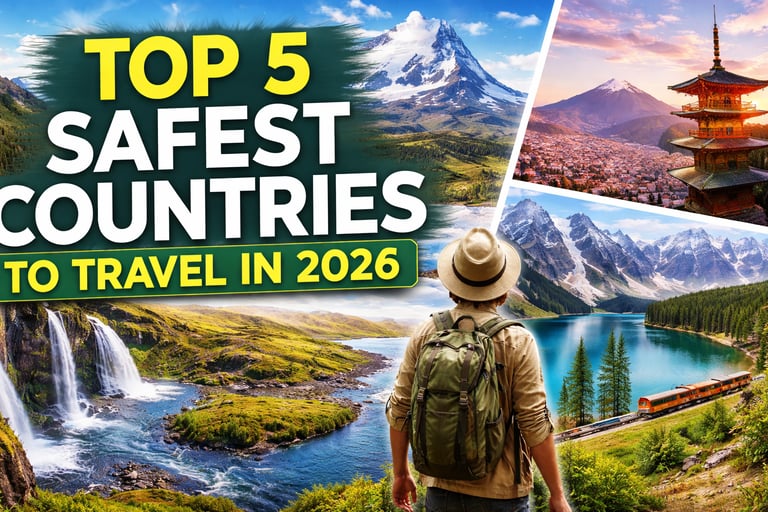
Top 5 Safest Countries in the World to Travel in 2026
Discover the top 5 safest countries in the world to travel in 2026. This Travel Explorer destination guide highlights what makes each country exceptionally secure for international tourists — from low crime rates and robust healthcare systems to political stability and traveler-friendly infrastructure. Comprehensive insights, safety tips, and cultural highlights included.
12/27/20257 min read
Introduction
Planning international travel in 2026 means more than picking beautiful landscapes or iconic cities — it also means choosing destinations where safety, security, and peace of mind are part of the journey. In a world that continues to evolve politically, socially, and environmentally, travelers today prioritize safety as much as experiences. Whether you are a solo explorer, a family on vacation, or a seasoned traveler seeking your next adventure, destinations that rank high in safety offer reassurance through low crime rates, excellent healthcare, political stability, and strong infrastructure.
This Travel Explorer guide presents the top five safest countries in the world to visit in 2026. Each country has been selected based on multiple safety indicators: personal safety and security, health conditions and facilities, transportation systems, natural disaster risk mitigation, and overall political and social stability. Beyond safety, these destinations provide rich cultural experiences, stunning natural environments, and vibrant urban life — making them ideal for both first-time travelers and seasoned globetrotters.
1. Iceland
Overview
Iceland consistently ranks at the top of global peace and safety indexes, making it a perennial favorite among travelers who value security without compromising on adventure. Characterized by low crime rates, strong rule of law, and a deeply trusting society, Iceland offers a unique travel experience where visitors can explore dramatic volcanic landscapes, cascading waterfalls, and serene fjords with minimal concern for personal safety.
Why Iceland Is Safe
Low Crime Rate:
Iceland’s crime rate is among the lowest in the world. Violent crime is exceptionally rare, and most issues that arise involve minor property crimes. Travelers can often stroll through cities and towns late into the night without the anxiety experienced in larger, more congested cities elsewhere.
Social Structure and Law Enforcement:
Icelandic society is built on mutual trust and respect. Law enforcement is approachable and generally unarmed, relying on community policing and high levels of public trust. This contributes to a safe and welcoming environment for international visitors.
Healthcare and Emergency Services:
High-quality healthcare facilities are available throughout the country, especially in the capital, Reykjavik. Emergency services are reliable, and English is widely spoken among medical professionals, reducing language barriers during urgent situations.
Travel Experience Highlights
Golden Circle Route: Discover geysers, geothermal features, and Þingvellir National Park, a UNESCO World Heritage Site.
Blue Lagoon: A globally renowned geothermal spa set in striking lava fields — safe, relaxing, and well managed.
Northern Lights: From late autumn to early spring, visitors can witness this cosmic spectacle.
East Fjords: Less visited but incredibly scenic, offering tranquility and nature-focused travel.
Safety Tips for Travelers
Weather Preparedness: Iceland’s weather can change rapidly. Always check forecasts before outdoor excursions.
Respect Nature: Geothermal pools and landscapes are breathtaking but can be dangerous if safety signs and local advice are ignored.
Driving Conditions: If renting a car, prepare for gravel roads and changing weather; consider 4x4 vehicles in winter.
2. New Zealand
Overview
New Zealand is synonymous with safety, friendly locals, and incredible natural beauty. Whether you are hiking in the Southern Alps, exploring Maori culture, or experiencing cosmopolitan life in Auckland or Wellington, New Zealand provides a secure travel environment bolstered by political stability and community-oriented values.
Why New Zealand Is Safe
Political Stability and Governance:
As one of the most politically stable nations globally, New Zealand has strong institutions and transparent governance. Public services are reliable, and social infrastructure supports both residents and visitors alike.
Low Violent Crime:
While minor thefts can occur in urban centers, violent crime is relatively uncommon. Tourists report feeling safe walking alone at night in most locations.
Health and Safety Standards:
New Zealand’s healthcare system is highly rated, with quality facilities and professionals accessible in both urban and many rural areas. Emergency services are efficient, and communication in English poses no language barrier for most international travelers.
Travel Experience Highlights
Milford Sound: A majestic fjord offering boat tours, wildlife viewing, and peaceful natural beauty.
Rotorua: A cultural hub rich in Maori heritage, with geothermal parks, cultural performances, and wellness experiences.
Queenstown: Adventure capital, known for bungee jumping, skiing, and adrenaline-packed activities.
Bay of Islands: Ideal for maritime experiences, dolphin watching, and historic sites.
Safety Tips for Travelers
Outdoor Preparedness: With so many natural attractions, familiarize yourself with safety protocols for hiking, water activities, and weather changes.
Biosecurity Laws: New Zealand has strict policies to protect its unique environment. Follow all regulations when entering the country.
3. Switzerland
Overview
Switzerland is recognized worldwide for its precision, order, and quality of life — attributes that extend into the safety and security of travelers. With well-maintained infrastructure, an excellent healthcare system, and a reputation for reliability, Switzerland is a top choice for travelers who seek comfort and confidence in every aspect of their journey.
Why Switzerland Is Safe
Low Crime and High Trust Society:
Switzerland has low crime rates and a high standard of living. Public spaces are well regulated and monitored. The culture emphasizes personal responsibility and respect for law and order.
Superior Public Transportation:
The transport system in Switzerland is punctual, clean, and connected extensively across cities, towns, and rural regions. This high level of infrastructure integrity contributes to overall traveler safety.
Healthcare Access:
Switzerland’s healthcare services are some of the best in the world. High standards of medical care are available in urban centers and many peri-urban locations, with multilingual staff and excellent emergency response.
Travel Experience Highlights
Alpine Landscapes: From the Matterhorn to Jungfraujoch, Switzerland’s mountains are breathtaking.
Lake Geneva and Zurich: Both offer cultural richness, culinary excellence, and historic charm.
Lucerne and Interlaken: Perfect bases for mountain excursions, scenic train rides, and lakeside walks.
Safety Tips for Travelers
Seasonal Preparedness: In winter, snow and ice can create hazardous conditions for drivers and hikers; appropriate gear and awareness are essential.
Cost Considerations: Switzerland is expensive; budget accordingly to avoid financial stress during travel.
4. Japan
Overview
Japan seamlessly blends ancient traditions with modern innovation, offering travelers a fascinating cultural experience enveloped in safety. Known for its meticulous attention to detail and respect for order, Japan consistently ranks high in travel safety metrics — from minimal violent crime to world-class disaster preparedness.
Why Japan Is Safe
Exceptional Public Safety:
Japan’s crime rate is remarkably low, particularly when it comes to violent crime. Citizens and visitors alike benefit from a culture that prioritizes respect for law, courtesy, and social responsibility.
Disaster Preparedness:
Japan experiences earthquakes and typhoons, but the country’s infrastructure and emergency response systems are among the most advanced in the world. Early warning systems, trained responders, and public education make travel safer even in regions prone to natural events.
Healthcare Quality:
Japan’s healthcare system ranks highly in terms of accessibility, quality, and technology. Medical professionals are skilled, and even in rural areas, clinics and hospitals provide dependable care for travelers.
Travel Experience Highlights
Tokyo and Kyoto: Vibrant cities offering everything from cutting-edge technology and cuisine to historical temples and serene gardens.
Hiroshima Peace Memorial: A moving historical site promoting peace and reflecting Japan’s commitment to global harmony.
Hokkaido: Ideal for nature lovers — offering national parks, hot springs, and seasonal festivals.
Safety Tips for Travelers
Respect Local Norms: Japan’s culture values quiet and order. Public behavior expectations should be observed to avoid misunderstandings.
Natural Disaster Awareness: Learn basic disaster response actions and register with travel advisories if needed.
5. Canada
Overview
Canada is known for its welcoming nature, multicultural society, and vast landscapes that offer both serenity and adventure. With a strong track record in personal safety, public services, and healthcare, Canada rounds out this list of the top five safest countries to travel in 2026.
Why Canada Is Safe
Stable and Open Society:
Canada ranks highly on global safety indexes due to its political stability, respect for individual rights, and emphasis on community welfare. Visitors often note the friendliness and helpfulness of local residents.
Crime Rates:
Though urban centers like Toronto and Vancouver have the occasional petty crime, overall crime rates are moderate and manageable, particularly compared to many other developed nations.
Healthcare and Emergency Support:
Canadian healthcare facilities are well-equipped, and emergency services respond promptly when needed. In tourist hubs, hospitals often have multilingual support, particularly in larger cities.
Travel Experience Highlights
Banff and Jasper National Parks: Majestic mountains, lakes, and wildlife define these iconic Canadian destinations.
Quebec City: A slice of European charm in North America, with historic architecture and culinary delights.
Niagara Falls: One of the world’s most famous natural wonders, easily accessible and family-friendly.
Safety Tips for Travelers
Wildlife Awareness: In national parks, follow guidelines for encounters with large animals like bears and moose.
Weather Preparation: Canada’s climate varies widely; travelers should research seasonal conditions and prepare accordingly.
What Makes a Destination “Safe”?
1. Personal Security
Personal security encompasses crime rates, social stability, and respect for law. Countries on this list consistently demonstrate low levels of violent crime and robust community policing.
2. Healthcare Systems
Travelers must consider access to quality medical care, emergency response times, and ease of communication with healthcare professionals. All five countries detailed above have strong health systems and protocols to assist foreign visitors.
3. Political and Social Stability
Stable governance reduces the risk of civil unrest and unexpected policy changes that could jeopardize traveler safety. The countries featured here enjoy high levels of political stability and transparent legal frameworks.
4. Infrastructure and Mobility
Reliable transportation, clear signage, and readily available tourist support services contribute to overall safety. Places with well-maintained roads, efficient public transit, and traveler-oriented information centers rank highly in traveler confidence.
5. Environmental and Natural Risk Management
Earthquakes, extreme weather, and other environmental factors can present risks. Safety rankings take into account how well countries prepare for and mitigate these challenges through infrastructure, public awareness, and emergency services.
Practical Travel Safety Advice for 2026
Even when visiting the safest countries, travelers should adopt smart safety habits:
1. Register With Local Embassies:
For extended stays or when planning activities in remote areas, register your travel plans with your home country’s embassy or consulate.
2. Carry Digital and Physical Copies of Important Documents:
Back up passports, insurance information, and emergency contacts both electronically and on paper.
3. Know Local Laws and Customs:
Laws vary significantly across countries. Familiarize yourself with local regulations, cultural norms, and etiquette to avoid unintended offenses.
4. Secure Travel Insurance:
Comprehensive travel insurance that covers health, cancellations, and adventure activities provides peace of mind.
5. Maintain Situational Awareness:
Stay informed about local news, weather alerts, and transportation updates during your trip.
Conclusion
Travel in 2026 promises remarkable experiences, but for many, safety remains the cornerstone of meaningful exploration. The five countries featured in this Travel Explorer guide — Iceland, New Zealand, Switzerland, Japan, and Canada — represent some of the most secure and welcoming destinations in the world. Each offers unique attractions, dependable infrastructure, and environments where travelers can immerse themselves without undue worry.
From Iceland’s dramatic natural wonders and New Zealand’s adventurous landscapes to Switzerland’s precision, Japan’s cultural depth, and Canada’s vast outdoors, these destinations combine beauty with structural safety. Whether you are planning an epic bucket-list journey, a family vacation, or a solo expedition, these countries stand out as safe, enriching, and memorable places to travel in 2026.
© 2026. All rights reserved.