
Traveling to Mexico in 2026 What You Must Know About Cartel Risks Before You Go
Planning a trip to Mexico in 2026? Millions visit safely every year, but organized crime still operates in certain regions. This practical, no-hype safety guide explains how cartels actually function, where risks realistically exist, how tourists get into trouble, and the exact precautions you should take to reduce exposure. If you want to travel smart, avoid unnecessary danger, and protect yourself without paranoia, read this before booking your trip.
SOUTH AMERICA
2/28/20264 min read
First Understand the Reality Not the Headlines
When people hear the word “cartel,” they imagine every street in Mexico is dangerous.
That perception is inaccurate.
Mexico is a vast country with 130+ million people, world-class resorts, thriving cities, and millions of annual international tourists.
At the same time, organized criminal groups operate in specific regions. Violence typically involves conflicts between rival groups or targeted criminal activity.
Tourists are rarely the intended targets.
However, being in the wrong place at the wrong time can increase risk.
Your goal is not fear.
Your goal is informed positioning.
Where Cartel Activity Is Concentrated
Organized criminal groups often operate in:
Border regions
Drug trafficking corridors
Rural zones with weak institutional presence
Certain high-conflict urban districts
Popular tourist hubs such as Cancún, Playa del Carmen, and Mexico City generally maintain heavy security presence in tourism zones.
That does not mean zero risk.
It means risk is location-specific, not nationwide.
Always review official travel advisories from your home country before departure.
How Tourists Accidentally Increase Their Own Risk
Most incidents involving foreigners are linked to one of these patterns:
Involvement in illegal drug purchases
Wandering into high-risk neighborhoods late at night
Using unregulated transportation
Displaying excessive wealth
Trusting strangers too quickly
Cartels are not randomly hunting tourists.
But illegal markets intersect with tourism.
If you enter black-market environments, your risk increases dramatically.
Rule Number One Avoid Illegal Activity Completely
This is non-negotiable.
Buying drugs, even recreationally in party areas, connects you directly to organized criminal supply chains.
Disputes, scams, and robberies often occur during these interactions.
Staying out of illegal markets removes the majority of risk exposure.
Choose Your Destination Strategically
Mexico in 2026 remains one of the world’s most visited destinations.
Safer tourism-focused zones typically include:
Cancún hotel zone
Los Cabos resort corridor
Puerto Vallarta central tourist area
Mérida historic center
Regions with higher advisory levels may include parts of border states and conflict corridors.
Research state-level risk, not just national headlines.
Transportation Safety in 2026
Transportation decisions significantly affect personal safety.
Best practices:
Use authorized airport taxis
Use verified ride-hailing apps
Avoid unmarked vehicles offering rides
Do not hitchhike
Avoid overnight intercity bus routes in high-advisory regions
If renting a car:
Use major rental companies
Avoid driving isolated rural highways at night
Keep fuel above half tank in remote areas
Highway crime exists but is not widespread in major tourist corridors during daytime.
Hotel and Accommodation Selection
Choose:
Reputable hotels
Well-reviewed boutique stays
Gated properties in unfamiliar cities
Avoid:
Last-minute budget lodging in unknown neighborhoods
Properties with poor security reviews
Check for:
24-hour reception
Controlled access
Good lighting
In higher-risk cities, prefer central areas rather than peripheral districts.
Digital Security Matters Too
Cartels are not hacking tourists for fun, but petty criminals exploit unsecured devices.
Precautions:
Avoid public Wi-Fi for financial transactions
Use a VPN
Keep phone location sharing limited
Disable Bluetooth when not needed
Also avoid posting real-time location updates on social media.
Share after you leave the area.
Situational Awareness Is Your Strongest Defense
Professional security consultants emphasize a simple principle:
Be aware without appearing anxious.
Watch for:
Sudden street disturbances
Groups arguing aggressively
Rapid movement or panic in public areas
If something feels wrong, leave calmly and immediately.
Do not stop to observe.
Distance reduces risk.
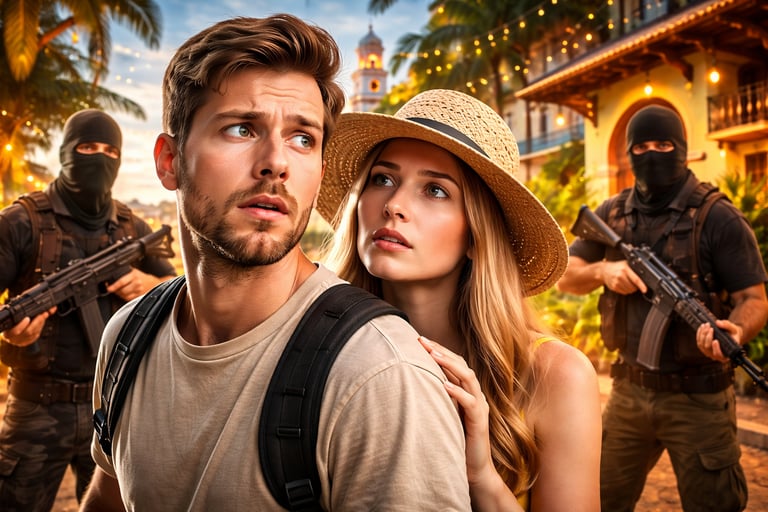
What To Do If You Encounter Armed Individuals
Remain calm.
Do not:
Make sudden movements
Take photos
Argue
Display hostility
Avoid eye contact but do not act evasive.
If checkpoint-like situations occur in rural regions:
Comply politely
Provide identification if requested
Avoid confrontation
Escalation increases danger.
Compliance reduces it.
Nightlife Risk Management
Party zones in cities like Tijuana and Cancún attract heavy nightlife traffic.
To reduce risk:
Travel in groups
Do not accept drinks from strangers
Keep your drink in sight
Leave at first sign of conflict
Arrange transportation before leaving venue
Many tourist-related incidents are tied to alcohol impairment reducing situational awareness.
Financial Safety Strategy
Carry:
Limited cash
One primary card
One backup card stored separately
Use ATMs inside banks or hotels only.
Avoid flashing large bills.
Do not wear high-value jewelry in unfamiliar districts.
Most crime targeting tourists is opportunistic, not organized.
Minimize visible opportunity.
Border Region Considerations
Border cities may experience more organized crime activity due to trafficking routes.
If visiting for medical tourism or business:
Schedule daytime travel
Use verified clinics
Avoid nightlife districts
Return to accommodation before late hours
Follow local embassy recommendations.
Emergency Planning Before Arrival
Before traveling:
Register with your embassy if available
Save local emergency numbers
Identify nearest hospital
Share itinerary with trusted contact
Preparation reduces panic if unexpected issues arise.
Understanding the Media Narrative
News coverage amplifies extreme events.
Violent incidents generate global headlines.
Millions of safe tourist visits generate no headlines.
That does not mean risk is zero.
It means risk must be evaluated proportionally.
Travel with preparation, not paranoia.
Regions to Research Carefully
While conditions change, historically higher-advisory states have included areas of:
Tamaulipas
Michoacán
Zacatecas
Guerrero
Check the most recent 2026 advisory before planning overland travel in these regions.
Advisory levels shift based on evolving conditions.
The Psychology of Staying Safe
Fear causes poor decisions.
Overconfidence also causes poor decisions.
Balanced awareness is optimal.
Travel confidently but conservatively.
Avoid unnecessary exposure to risk environments.
What Cartels Actually Focus On
Cartels primarily engage in:
Drug trafficking
Territorial disputes
Smuggling operations
Extortion of local businesses
Tourists are rarely strategic targets because tourism revenue benefits local economies.
Incidental harm is possible during violent disputes, but it is not typical targeting.
Your strategy is avoidance of high-conflict environments.
Travel Insurance Is Non-Negotiable
Comprehensive travel insurance should include:
Medical evacuation
Emergency medical treatment
Trip interruption
Theft protection
Choose providers covering high-advisory destinations if applicable.
Financial backup planning matters.
If You Feel Unsafe Immediately Change Environment
Safety rule:
Distance equals safety.
If a neighborhood feels tense:
Enter a well-lit commercial area
Enter a hotel lobby
Use authorized transport
Call local assistance
Do not hesitate due to embarrassment.
Personal safety overrides social comfort.
The Smart Traveler’s Framework for Mexico 2026
Choose destination strategically
Avoid illegal activity completely
Limit nightlife risk exposure
Use verified transport
Maintain digital and financial discipline
Monitor local advisories
Stay aware without panic
Mexico offers:
Cultural heritage
Cuisine
Beaches
History
Vibrant cities
Millions travel safely each year using basic precautions.
Final Reality
You do not need extreme tactics to stay safe in Mexico.
You need intelligent positioning.
Organized crime exists in certain areas.
But reckless behavior increases exposure far more than geography alone.
If you respect local laws, avoid illegal markets, choose destinations carefully, and maintain situational awareness, your probability of a safe and enjoyable trip remains high.
Travel informed.
Travel disciplined.

© 2026. All rights reserved.