
U.S. Invasion of Venezuela: Is Venezuela Safe to Travel in 2026? A Reality Check for Global Travelers
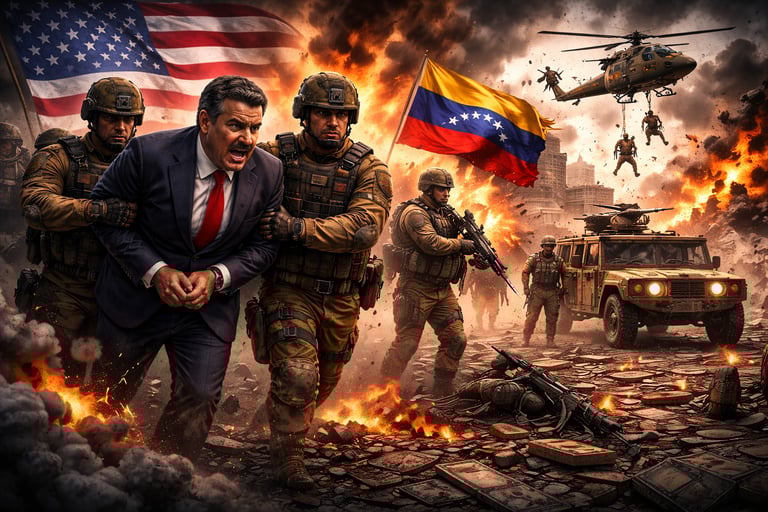
Following reports of U.S. military action in Venezuela, travelers are questioning safety in 2026. This in-depth Travel Explorer analysis examines ground reality, security risks, regions to avoid, and whether Venezuela is truly safe to visit this year Is Venezuela Safe to Travel in 2026
SOUTH AMERICA
1/3/20264 min read
Introduction: Why Travelers Are Suddenly Worried About Venezuela
In early 2026, international headlines exploded with reports of U.S. military involvement in Venezuela. For travelers, digital nomads, backpackers, and even adventure tourists, one question immediately surfaced:
Is Venezuela safe to travel in 2026?
This question is not driven by rumors alone. Venezuela has long carried a complex reputation—rich natural beauty paired with political instability, economic collapse, and security concerns. A direct military intervention by the United States elevates those concerns to an entirely new level.
This Travel Explorer guide provides a clear, realistic, and unbiased assessment of whether Venezuela is safe for travel in 2026, who should avoid it entirely, and what risks exist for those still considering a visit.
Understanding the Situation: What Does “U.S. Invasion” Actually Mean?
Before evaluating travel safety, it is critical to separate sensational headlines from operational reality.
A U.S. invasion does not necessarily imply nationwide warfare. Modern military actions often involve:
Targeted operations
Strategic strikes
Political destabilization
Support for internal transitions
However, even limited interventions create ripple effects that directly impact civilian life, transportation, tourism infrastructure, and personal safety.
For travelers, perception matters as much as reality. Airlines cancel routes, embassies issue advisories, insurance coverage becomes void, and local law enforcement shifts focus away from tourists.
Venezuela’s Pre-2026 Travel Risk Profile
Even before 2026, Venezuela ranked among the highest-risk travel destinations globally.
Key long-standing issues include:
High violent crime rates
Frequent power outages
Fuel shortages despite vast oil reserves
Weak healthcare infrastructure
Currency instability
Limited police reliability
While some travelers visited without incident, those experiences required extreme caution, local connections, and constant risk management.
The U.S. invasion reports amplify every one of these challenges.
Security Situation in 2026: What Has Changed?
The most immediate changes affecting travelers include:
Increased military presence
Roadblocks, checkpoints, and armed patrols have become more common, especially in major cities.Unpredictable protests
Political demonstrations can erupt without warning and may turn violent quickly.Heightened surveillance
Foreigners attract attention during geopolitical crises, regardless of intentions.Rapid policy shifts
Borders, airports, and internal travel rules may change overnight.
Even if fighting is not visible in tourist areas, instability is felt everywhere.
Are Airports and Flights Operating Normally?
One of the first signs travelers notice is flight disruption.
In 2026:
Several international airlines have reduced or suspended routes
Ticket availability is inconsistent
Sudden cancellations are common
Layovers increase exposure time
Even if flights are operating, evacuation options may be limited during escalation phases. Travelers risk being stranded with minimal embassy support.
Is Caracas Safe for Tourists in 2026?
Caracas has always been Venezuela’s most complex city for visitors.
In 2026:
Crime remains high
Political tension is intense
Foreign presence is closely monitored
Certain neighborhoods are effectively no-go zones
Even experienced travelers are advised against independent movement. Tourist-friendly zones exist, but moving between them is dangerous without local security support.
For first-time travelers, Caracas is not safe in the current climate.
What About Tourist Regions and Natural Attractions?
Venezuela is famous for:
Angel Falls
Los Roques
Canaima National Park
Caribbean coastline
Unfortunately, these regions are not immune to instability.
Travel risks include:
Transportation breakdowns
Armed groups controlling routes
Limited emergency response
Scarcity of basic supplies
Remote destinations become more dangerous during national crises because help is far away and communication is unreliable.
Crime Risks: What Tourists Face on the Ground
Crime in Venezuela is not opportunistic—it is systemic.
Travelers face risks of:
Armed robbery
Express kidnapping
Hotel theft
Airport scams
Police extortion
During periods of instability, crime increases rather than decreases.
Foreigners are often assumed to have:
Hard currency
Electronics
International connections
That assumption alone makes tourists attractive targets.
Healthcare Reality: A Major Red Flag for Travelers
Healthcare infrastructure in Venezuela remains severely strained.
In 2026:
Medical supplies are limited
Hospitals are overcrowded
Emergency care is unreliable
International insurance may not be accepted
In a crisis environment, even minor injuries become serious risks.
Medical evacuation is expensive and may not be immediately available during military escalations.
Embassy Support: Limited and Overwhelmed
Many travelers assume their embassy will rescue them in emergencies.
This is a dangerous assumption.
During geopolitical crises:
Embassies reduce staff
Consular services are limited
Evacuations are not guaranteed
Priority is given to citizens with urgent needs
Travel Explorer strongly advises against relying on diplomatic safety nets.
Internet, Payments, and Daily Life Challenges
Travelers also face logistical difficulties:
Internet blackouts
Payment system failures
Limited ATM access
Fuel shortages impacting transport
Cash-only environments
Cryptocurrencies are used locally, but relying on them as a traveler during instability adds complexity rather than safety.
Risk Comparison: Venezuela vs Other Latin American Destinations
In 2026, Venezuela ranks significantly higher in risk compared to:
Colombia
Peru
Mexico
Brazil
Costa Rica
While no destination is risk-free, Venezuela combines political volatility, crime, and infrastructure failure into a single travel profile.
For most travelers, safer alternatives exist with similar cultural and natural experiences.
Who Should Absolutely Avoid Traveling to Venezuela in 2026?
Travel Explorer advises not traveling if you are:
A solo traveler
A first-time international traveler
Traveling with family or children
A digital nomad needing reliable internet
A journalist or content creator
A U.S. or allied passport holder
The risks far outweigh any potential reward.
Are There Any Travelers Who Might Still Go?
A very small group may still consider travel:
Humanitarian workers
Researchers with local partnerships
Individuals with family ties
Professionals with security arrangements
Even for these groups, travel requires contingency planning, risk insurance, and constant situational awareness.
Travel Insurance: What Most Policies Won’t Cover
Most standard travel insurance policies exclude:
War zones
Civil unrest
Government interventions
Military operations
Travelers often discover too late that their policy is invalid.
Specialized high-risk insurance is expensive and still limited in coverage.
Psychological Impact: Travel Stress in Conflict Zones
Beyond physical danger, travel in unstable regions creates:
Constant anxiety
Restricted movement
Decision fatigue
Limited enjoyment
Emergency mindset rather than exploration
Travel should expand horizons, not shrink them under fear.
Future Outlook: Will Venezuela Become Safe Again?
Venezuela’s long-term potential remains enormous, but recovery depends on:
Political stability
Economic reform
Infrastructure rebuilding
International reintegration
These are multi-year processes.
2026 is not a transition year for safe tourism. It is a period of uncertainty.
Final Verdict: Is Venezuela Safe to Travel in 2026?
For most travelers, the answer is no.
The combination of:
U.S. military involvement
Internal instability
Crime risks
Healthcare limitations
Transportation uncertainty
makes Venezuela one of the least suitable destinations for tourism in 2026.
Travel Explorer’s responsibility is clarity, not optimism. There will be a time when Venezuela opens safely to the world again—but that time has not yet arrived.
Closing Advice from Travel Explorer
If you are drawn to Venezuela’s culture and landscapes:
Follow developments closely
Avoid impulsive decisions
Choose safer neighboring destinations
Wait for stability, not headlines
Smart travel is not about bravery—it is about judgment.
Travel Explorer will continue monitoring the situation and updating travelers with honest, experience-driven guidance.

© 2026. All rights reserved.