
Who Owns Antarctica? Visa, Travel Rules & How to Visit the Frozen Continent in 2026
Planning to visit Antarctica in 2026? Discover who actually owns the icy continent, how you can travel there, what kind of visa or permits you need, and the fascinating reasons why this mysterious land remains one of the most protected and least inhabited places on Earth.
ANTARCTICA
10/26/20255 min read
Who Owns Antarctica?
Antarctica is unlike any other continent in the world when it comes to ownership. No single country owns it. Instead, the continent is governed by the Antarctic Treaty System, an international agreement signed in 1959 and in effect today. The treaty was designed to preserve Antarctica for scientific research, peace, and environmental protection. Military activities, mineral mining, and nuclear tests are strictly prohibited.
Several countries, including Argentina, Chile, Australia, France, New Zealand, Norway, and the United Kingdom, have made territorial claims before the treaty was signed. However, these claims are held in abeyance under the treaty. This means that although countries can claim regions, no nation exercises sovereignty over Antarctica. Instead, it remains a global commons dedicated to science and conservation.
The treaty also ensures that any research conducted is shared openly with the international community. This collaborative spirit is one of the most remarkable aspects of Antarctic governance. Scientists from different countries can work together on groundbreaking studies of climate change, wildlife, and glaciology without political interference.
Why Visit Antarctica?
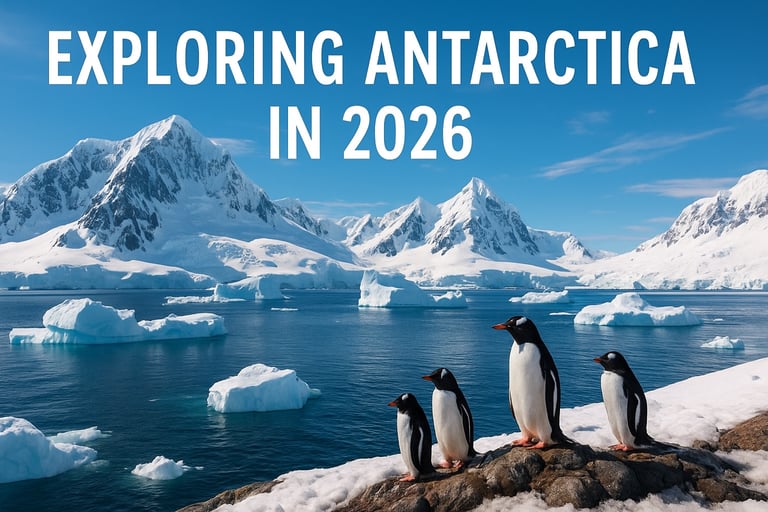
Antarctica is one of the last truly untouched places on Earth. Its icy landscapes, towering glaciers, and unique wildlife make it a dream destination for travelers. Penguins, seals, whales, and seabirds are among the iconic species that call Antarctica home. For many, seeing these creatures in their natural habitat is a once-in-a-lifetime experience.
The continent also offers an unparalleled sense of adventure. Unlike more traditional destinations, Antarctica challenges visitors with extreme weather, isolation, and unique travel logistics. Yet, for those prepared to embrace these challenges, the rewards are immense. Pristine landscapes, surreal ice formations, and awe-inspiring vistas make every moment unforgettable.
How Can We Go to Antarctica in 2026?
Travel to Antarctica is highly regulated, and independent travel is not permitted. Visitors must join an expedition organized by an authorized tour operator. TravelExplorer advises planning your Antarctic journey well in advance because spots fill up quickly, particularly during the Antarctic summer season, which lasts from November to March.
Most expeditions depart from southern South America, including Ushuaia in Argentina or Punta Arenas in Chile. Some itineraries may also depart from ports in Australia, New Zealand, or South Africa. The journey typically involves crossing the Drake Passage, a stretch of water known for its rough seas and dramatic weather changes. While challenging, crossing the Drake Passage is considered part of the adventure and adds to the sense of accomplishment upon arrival.
TravelExplorer recommends choosing operators affiliated with the International Association of Antarctica Tour Operators (IAATO). These operators follow strict environmental guidelines and ensure that your visit is both safe and sustainable.
Do You Need a Visa to Visit Antarctica?
Antarctica itself does not require a visa because it is not a sovereign country. However, travelers must comply with the visa and entry requirements of the country they are departing from. For example, if you are traveling from Argentina, you may need a tourist visa depending on your nationality. Similarly, departures from Chile, Australia, or New Zealand will be subject to those countries’ visa rules.
TravelExplorer emphasizes that checking visa requirements well in advance is crucial. Your expedition operator may also assist in confirming the necessary documents, but the responsibility ultimately lies with the traveler.
Permits and Authorizations
In addition to visas, all visitors must have a permit to enter Antarctica. These permits are required under the Antarctic Treaty to protect the environment and ensure that human activity does not disrupt scientific research or delicate ecosystems. Typically, the tour operator arranges the permit on behalf of travelers.
For travelers from India, authorization is required from the National Centre for Polar and Ocean Research (NCPOR). TravelExplorer highlights that securing this authorization can take time, so it should be initiated well before your planned departure date. The process ensures that all expeditions comply with environmental and safety regulations.
Travel Insurance and Safety
Comprehensive travel insurance is mandatory for Antarctic expeditions. This insurance must cover medical emergencies, evacuation, and other unexpected situations, as there are no hospitals or emergency services on the continent. Evacuation from Antarctica can be extremely expensive, often exceeding USD 100,000, making insurance essential.
TravelExplorer strongly advises verifying that your policy specifically covers Antarctic travel. Standard travel insurance may not include extreme destinations like Antarctica, so additional coverage is often necessary.
Best Time to Visit Antarctica
The Antarctic summer season, running from November to March, offers the best conditions for travel. During this time, temperatures are more manageable, daylight lasts for most of the day, and wildlife activity is at its peak. Penguins are nesting, seals are birthing pups, and whales are feeding, offering travelers extraordinary wildlife viewing opportunities.
TravelExplorer notes that the Antarctic Peninsula is the most accessible region, with milder weather and shorter crossing distances from South America. More remote areas, such as South Georgia or the Weddell Sea, require longer journeys and are typically more expensive, but they offer unparalleled landscapes and wildlife encounters.
Types of Expeditions
There are two primary ways to visit Antarctica: cruise-based and air-cruise expeditions.
Cruise-Based Expeditions: These involve traveling by ship from southern ports, often including multiple stops on the Antarctic Peninsula. Cruise-based trips can range from 10 days to several weeks, depending on the itinerary.
Air-Cruise Expeditions: For travelers with limited time, some operators offer flights to King George Island or other Antarctic locations, bypassing the Drake Passage. From there, passengers board a ship for shorter exploration trips.
TravelExplorer suggests considering your priorities—whether wildlife, photography, adventure, or pure sightseeing—when selecting an expedition type.
What to Pack for Antarctica
Packing for Antarctica requires careful planning due to the extreme cold and unpredictable weather. Essentials include:
Thermal base layers and waterproof outerwear
Insulated gloves, hats, and boots
Sunglasses and sunscreen to protect from strong UV reflection off the ice
Binoculars and cameras for wildlife spotting
Medications and personal items, as resupply is impossible once on the continent
TravelExplorer also recommends packing lightly yet comprehensively. Layering clothing is key, as temperatures can vary significantly during excursions and shipboard activities.
Environmental Responsibility
Antarctica is one of the most fragile environments on Earth. Every visitor has a responsibility to minimize their impact. Tour operators affiliated with IAATO follow strict environmental guidelines, including:
Limiting group sizes for landings
Prohibiting littering or disturbing wildlife
Ensuring that all waste is removed from the continent
TravelExplorer emphasizes that sustainable tourism is essential to preserve Antarctica for future generations. Visitors are not merely tourists—they are stewards of the continent’s unique ecosystems.
Unique Experiences in Antarctica
Travel to Antarctica offers experiences unlike anywhere else:
Wildlife Encounters: Watch penguins waddle, seals sunbathe on ice floes, and whales breach in frigid waters.
Ice Landscapes: Explore massive glaciers, icebergs in every shape and color, and snow-covered mountains.
Scientific Stations: Some tours offer glimpses into international research stations, where cutting-edge climate and wildlife research is conducted.
Adventure Activities: Depending on the tour, travelers may participate in kayaking, mountaineering, or even polar diving.
TravelExplorer points out that these experiences create a sense of connection to a place few humans ever see. Each moment is a reminder of Earth’s natural wonder and the importance of conservation.
Costs of Visiting Antarctica
TravelExplorer notes that Antarctica is not a budget destination. Expedition costs vary widely, from approximately USD 5,000 for shorter air-cruise trips to over USD 20,000 for longer cruises or more remote regions. Costs cover accommodation, guided excursions, meals, permits, and sometimes insurance.
While expensive, the value lies in the unique experiences and once-in-a-lifetime opportunities that the continent provides. Many travelers consider it a bucket-list adventure worth the investment.
Conclusion
Visiting Antarctica in 2026 is an extraordinary journey into a land that belongs to no one but is protected by everyone. Its governance under the Antarctic Treaty ensures that it remains a hub for science, peace, and environmental preservation.
Travelers can visit safely and responsibly by joining authorized expeditions, securing the necessary permits, arranging visas for departure countries, and obtaining comprehensive insurance. With careful planning, proper preparation, and a commitment to environmental stewardship, a trip to the White Continent offers memories that will last a lifetime.
TravelExplorer provides detailed guides, itineraries, and advice for planning Antarctic travel, making it the go-to resource for explorers seeking to experience the world’s most remote and pristine destination.
© 2026. All rights reserved.