
Why Antarctica Is the Most Dangerous Tourist Destination on Earth – Real Risks Explained
Is Antarctica dangerous? Discover the real risks, accidents, extreme conditions, and why Antarctica is considered the most dangerous place tourists can visit.
ANTARCTICA
3/24/20262 min read
Antarctica Is Beautiful — But It Is Also Extremely Dangerous
Antarctica is often marketed as a dream destination.
But behind the glaciers and wildlife lies one of the most dangerous environments on Earth.
This is not fear-based content — it is reality backed by conditions, logistics, and history.
Extreme Weather Is the Biggest Threat
Antarctica holds the record for the coldest temperature ever recorded on Earth.
Temperatures can drop below -60°C in winter and still remain well below freezing even during travel season.
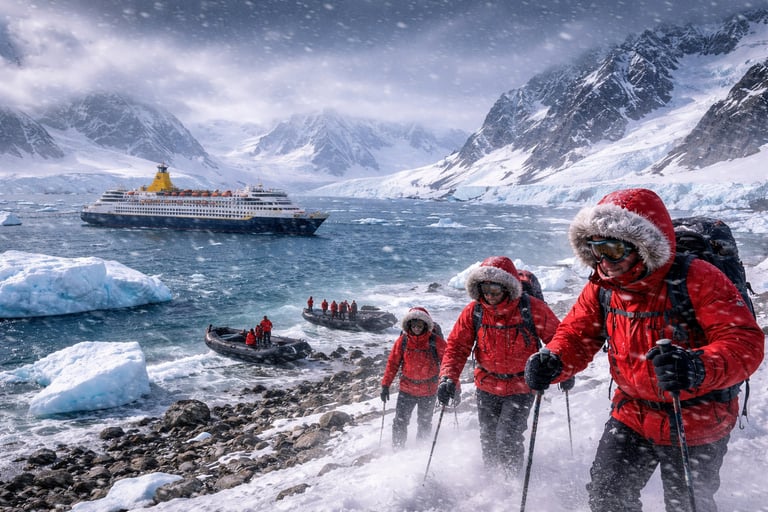
Wind speeds can exceed 200 km/h, creating conditions where:
You cannot stand properly
Visibility can drop to zero
Exposure can become life-threatening within minutes
This is why every movement is controlled.
The Drake Passage Is One of the Roughest Seas in the World
Before even reaching Antarctica, travelers must cross the Drake Passage.
This is considered one of the most dangerous ocean crossings.
Waves can reach 30–50 feet.
Ships experience violent motion.
Seasickness affects a large percentage of travelers.
Even modern ships cannot avoid the natural intensity of this route.
There Is No Real Emergency Support
This is one of the most critical risks.
Antarctica has:
No hospitals
No cities
No permanent emergency systems
If something goes wrong:
Evacuation can take days
Weather can delay rescue
Costs can reach $50,000 to $150,000+
You are completely dependent on your expedition team.
Accidents Do Happen (But Rarely Discussed)
While tourism is generally safe, incidents have occurred:
Ship grounding incidents
Passenger injuries during landings
Medical emergencies onboard
Due to strict regulation, major accidents are rare — but the risk level remains high because of the environment.
Ice and Terrain Are Unpredictable
Antarctica is constantly changing.
Glaciers shift
Ice breaks unexpectedly
Surfaces can be unstable
A safe path today may not exist tomorrow.
This is why tourists are never allowed to explore independently.
Wildlife Can Be Dangerous (Indirectly)
Animals in Antarctica are not aggressive like predators elsewhere.
However:
Seals can be territorial
Penguins can react if approached closely
The main danger is human behavior, not animals.
Breaking distance rules can create risk.
Mental and Physical Stress Is Real
Most blogs ignore this.
Antarctica can be mentally challenging:
Isolation from the world
No internet or limited connectivity
Continuous daylight (in summer)
Motion from the ship
Physically:
Cold exposure
Fatigue from landings
Sea conditions
This is not a relaxing vacation for everyone.
Why Antarctica Is Still Considered Safe
This might sound contradictory.
Despite all risks, Antarctica tourism has a strong safety record.
Why?
Strict regulations
Highly trained expedition teams
Controlled visitor movement
Advanced planning
Risk exists — but it is managed professionally.
Who Should Avoid Antarctica
Antarctica is not suitable for everyone.
You should reconsider if:
You have serious medical conditions
You cannot handle rough seas
You expect luxury-style relaxation
You prefer flexible travel
This is an expedition, not a comfort trip.
The Real Truth About Risk
Antarctica is dangerous — but not recklessly so.
It is dangerous because:
The environment is extreme
There is no margin for error
Nature is completely in control
The safety comes from respecting these realities.
Final Insight
The danger of Antarctica is exactly what makes it special.
It is one of the last places on Earth where humans are not in control.
And that is why the experience feels so different.
Conclusion
Antarctica is not just a destination — it is an environment that demands respect.
Understanding the risks does not make the journey scary.
It makes it real.
© 2026. All rights reserved.