
Why Dubai Feels Overrated in 2026: The Truth Behind the Glamour Nobody Talks About
Dubai looks unreal on Instagram — record-breaking skyscrapers, luxury cars, artificial islands. But in 2026, many travelers quietly admit something surprising: it feels repetitive, expensive, and emotionally empty. Is Dubai Feels Overrated in 2026 ?
ASIA
2/17/20264 min read
The Dubai Illusion: Spectacle vs. Substance
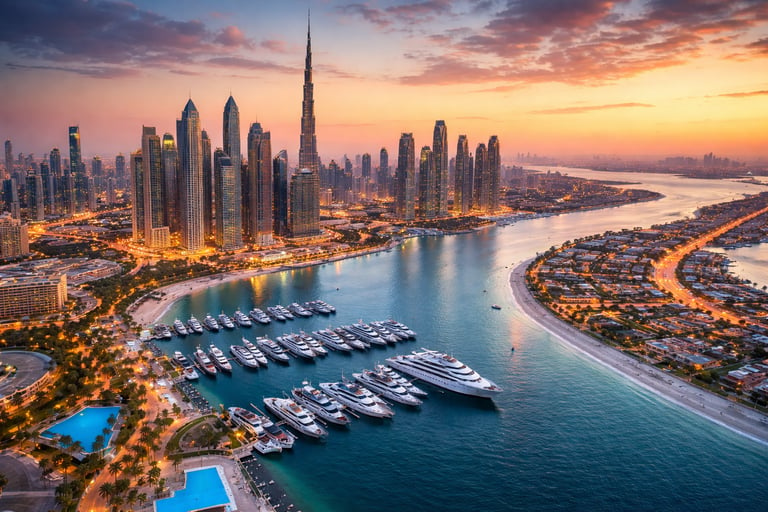
Dubai is designed to impress instantly. The skyline led by the Burj Khalifa dominates global travel imagery. The man-made marvel of Palm Jumeirah symbolizes engineering ambition.
Everything is bigger, shinier, and newer.
But impressive does not always equal meaningful.
Many travelers in 2026 describe Dubai as visually stunning — yet emotionally neutral. It delivers spectacle, but often lacks the layered historical narrative found in older cities.
You can admire it.
But do you feel connected to it?
1. Built for Visual Impact, Not Cultural Depth
Dubai excels at creating iconic visuals:
• Record-breaking skyscrapers
• Designer hotel interiors
• Infinity pools in the sky
• Symmetrical cityscapes
However, cultural immersion is limited compared to cities built over centuries. Unlike Rome, Kyoto, or Istanbul — where every street carries historical weight — Dubai is relatively young in its modern form.
The result: fewer organic stories, more curated experiences.
2. The Luxury Formula Becomes Predictable
The city operates on a high-end lifestyle model:
• Mega malls
• Premium dining
• Luxury beach clubs
• Supercar culture
The Dubai Mall is among the largest in the world — impressive in scale. Yet, for many visitors, once you’ve explored one mega mall, the novelty diminishes.
After two or three days, repetition becomes noticeable.
When a city’s primary activities revolve around spending, the experience can feel transactional rather than transformative.
3. Climate Constraints Reduce Exploration
From late spring to early autumn, temperatures frequently exceed 40°C.
This has structural consequences:
• Limited outdoor walking
• Daytime sightseeing becomes uncomfortable
• Dependence on indoor attractions increases
Travelers who enjoy wandering through neighborhoods organically often find Dubai restrictive.
Exploration becomes scheduled rather than spontaneous.
4. Car-Centric Urban Design
Dubai was designed around vehicles.
While public transport exists, many attractions require taxis or long transfers. Walkable districts are limited compared to cities like Barcelona or Tokyo.
The absence of dense pedestrian street culture reduces serendipitous discovery — a key component of memorable travel.
You don’t stumble upon hidden cafés easily.
You move between curated destinations.
5. Artificial Landscapes and Engineered Experiences
Dubai’s ambition is undeniable:
• The World Islands
• Indoor ski slopes
• Man-made beaches
• Controlled desert safari routes
These are technological achievements.
But for travelers seeking raw, unfiltered nature, engineered environments can feel theme-park-like.
There is precision.
But limited unpredictability.
And unpredictability often fuels emotional memory.
6. Culture Exists — But It’s Subtle
Dubai is home to a diverse expatriate population, making it cosmopolitan. However, traditional Emirati culture is not as dominant in everyday street life as in older cities with preserved historic districts.
While heritage zones exist, the dominant visual identity remains ultra-modern.
For some visitors, this creates a sense of detachment.
They see global luxury, not local depth.
7. High Cost, Questionable Value Ratio
Accommodation, nightlife, dining, and attractions operate at premium price points.
In 2026, global travelers are increasingly value-conscious. When comparing experiences:
Three days in Dubai can equal the cost of:
• A week across Southeast Asia
• Multi-city European itineraries
• Cultural immersion trips elsewhere
The cost-to-experience ratio becomes a common criticism.
Luxury is present.
But not always proportional in emotional return.
8. Nightlife: Glamorous but Formulaic
Dubai’s nightlife is polished:
• Rooftop lounges
• International DJs
• Branded beach events
• VIP club culture
However, independent art scenes and underground subcultures are less visible than in cities known for creative depth.
The experience feels curated — impressive but structured.
For some travelers, structure equals safety.
For others, structure equals predictability.
9. Social Media Amplification in 2026
Dubai performs exceptionally well in short-form video culture:
• Supercars on highways
• Drone shots of skyline symmetry
• Luxury hotel suites
• Infinity pools overlooking the desert
These visuals dominate travel feeds.
But social media prioritizes aesthetics, not experiential nuance.
The gap between expectation and reality is where disappointment grows.
10. Short-Stay Destination Pattern
A recurring review pattern emerges:
“Two or three days is enough.”
Typical itinerary:
• Skyline visit
• Desert safari
• Beach club
• High-end dinner
• Landmark observation deck
After this checklist, many travelers struggle to find new layers.
Cities with deeper historical or artistic foundations often reward longer stays.
Dubai tends to plateau quickly.
11. The Psychological Effect of Excess
Dubai embodies aspiration:
• Wealth
• Modernity
• Speed
• Global ambition
However, constant exposure to luxury reduces its impact.
When everything is exceptional, nothing feels exceptional.
This is not a flaw in design — it’s human psychology.
Novelty requires contrast.
12. Safety and Cleanliness: Its Strongest Assets
To be precise and balanced:
Dubai is:
• Extremely safe
• Highly organized
• Clean and efficient
• Infrastructure-advanced
For travelers prioritizing security and predictability, these are major advantages.
The boredom critique typically comes from experience-seeking travelers — not comfort-seeking ones.
13. The 2026 Travel Shift
Travel motivations are evolving:
• Authenticity over opulence
• Nature over neon
• Story over spectacle
• Slow travel over status
Dubai was built during an era that celebrated visible luxury.
As cultural preferences shift toward meaning-driven travel, the city’s core identity feels slightly misaligned with emerging expectations.
14. Overhyped or Misaligned Expectations?
Dubai is not objectively dull.
It is highly marketed.
And heavy marketing elevates expectations to unrealistic levels.
When visitors anticipate life-changing depth and instead receive engineered excellence, dissatisfaction appears.
The issue may not be Dubai itself.
It may be expectation inflation.
15. Who Will Enjoy Dubai in 2026?
Dubai suits travelers who:
• Prefer polished, organized experiences
• Enjoy luxury hospitality
• Value safety and structure
• Want modern aesthetics
It may disappoint those who:
• Seek historical immersion
• Love organic street culture
• Prefer backpacker authenticity
• Want budget exploration
Travel satisfaction depends on alignment.
Final Verdict
Dubai in 2026 remains a technological and architectural marvel.
It is bold.
It is ambitious.
It is meticulously engineered.
But for many modern travelers seeking depth, unpredictability, and layered culture, it can feel repetitive after the initial wow-factor fades.
Dubai is not empty.
It is specialized.
Understanding that specialization is key to managing expectations.
Conclusion
The real question is not whether Dubai is boring.
The real question is what you expect from travel.
If you seek spectacle, comfort, and luxury — Dubai delivers consistently.
If you seek emotional connection, organic discovery, and centuries of living history — you may leave feeling underwhelmed.
In 2026, as travel becomes more experience-centered, the debate around Dubai’s hype will continue.
Not because the city failed.
But because traveler psychology evolved.
© 2026. All rights reserved.