
Why India Is the Cheapest Country to Travel in 2026 – A Budget Traveler’s Dream | Travel Explorer
From food and transport to hotels and experiences, discover why India is the cheapest country to travel in 2026. A complete budget travel breakdown by Travel Explorer.
ASIA
1/20/20265 min read
Introduction: Cheap Travel Has a New Champion in 2026
In 2026, global travel has become more expensive than ever. Airfares are high, hotels in Europe feel unaffordable, and even Southeast Asia is no longer as cheap as it once was. Yet one country continues to shock travelers with how far their money can go.
That country is India.
India is not just “cheap for Asia.” It is, in practical terms, the cheapest large-scale travel destination in the world in 2026 when you compare cost versus experience. Food, transport, accommodation, culture, nature, history, and human interaction all come at a price point that feels almost unreal to foreign travelers.
This is not hype. This is economic reality.
Travel Explorer breaks down exactly why India remains the world’s cheapest travel country in 2026, and why budget travelers, digital nomads, and long-term explorers are quietly choosing India over everywhere else.
The Indian Rupee Advantage: Currency Reality in 2026
One of the biggest reasons India is so cheap to travel in 2026 is the exchange rate.
For travelers coming from the US, Europe, Australia, or the Middle East, the Indian Rupee offers massive purchasing power. Even after global inflation, the rupee remains relatively weak against major currencies, which directly benefits foreign travelers.
What feels expensive for locals often feels unbelievably cheap for visitors. A meal that costs a local a meaningful amount may feel like spare change to a traveler earning in dollars or euros.
Currency strength alone makes India more affordable than most of Asia, Africa, or Latin America.
Food in India: World-Class Meals at Street Prices
Food is where travelers feel the difference instantly.
In 2026, you can still eat a full, satisfying Indian meal for less than the price of a coffee in many Western countries. Street food, local restaurants, and family-run eateries dominate Indian cities and towns.
You are not limited to cheap food because you are poor. You eat cheap because that is how India eats.
A fresh plate of dal, rice, roti, vegetables, and yogurt can cost less than a fast-food burger elsewhere. Even in major cities, prices remain low if you eat where locals eat.
India proves that cheap food does not mean low quality. It often means fresh, homemade, and deeply rooted in tradition.
Accommodation Costs: From Hostels to Hotels Without Breaking the Bank
Accommodation is one of the biggest expenses in travel, but in India it is surprisingly flexible.
In 2026, India offers:
Ultra-cheap hostels for backpackers
Comfortable guesthouses for long stays
Mid-range hotels at budget prices
Luxury experiences at a fraction of global costs
You can stay in a clean, private room in many Indian cities for the cost of a shared dorm in Europe. Even premium hotels, especially outside major tourist zones, are dramatically cheaper compared to global standards.
This wide pricing spectrum allows travelers to control expenses without sacrificing comfort.
Transportation in India: Cheap, Dense, and Everywhere
Transportation costs often determine whether a country feels affordable or stressful. India excels here.
Local buses cost cents. Metro systems in major cities are efficient and cheap. Trains connect the entire country at prices that feel almost symbolic compared to Western rail fares.
In 2026, ridesharing, electric rickshaws, and budget airlines have further reduced travel costs. You can cross entire states for less than the price of a short taxi ride in many countries.
India’s transportation density means you rarely need expensive options. There is always a cheaper way to move.
Labor Costs: The Hidden Reason Everything Is Cheaper
One uncomfortable but real reason India is cheap to travel is low labor cost.
Service workers, drivers, cooks, hotel staff, guides, and cleaners are paid significantly less compared to global averages. This directly lowers the cost of travel services.
For travelers, this translates into affordable experiences. For India, it reflects broader economic realities.
Understanding this helps explain why India can offer such value without cutting corners on service availability.
No Mandatory Luxury Culture
In many countries, tourism is built around luxury pricing. In India, tourism developed organically around local lifestyles.
There is no pressure to upsell luxury everywhere. You can eat well, stay comfortably, and travel smoothly without being pushed into expensive experiences.
India does not force travelers into curated bubbles. You are free to travel cheaply because locals live cheaply too.
Street Culture and Local Markets Reduce Costs
India’s street-based economy plays a major role in affordability.
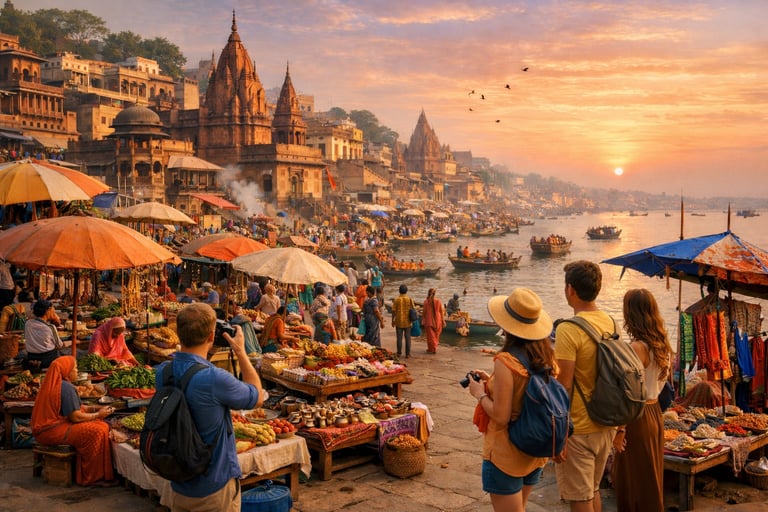
Food stalls, local markets, public transport, shared spaces, and open commerce keep prices low. There is less reliance on packaged, branded, tourist-only products.
You buy what locals buy. You pay what locals pay.
This removes the “tourist tax” that exists in many countries.
Digital Payments and Competition Keep Prices Honest
By 2026, India’s digital payment ecosystem is among the most advanced in the world. Cashless payments, QR systems, and instant transfers are common everywhere.
This transparency increases competition. Prices are visible. Overcharging is harder. Locals compare costs constantly.
Competition keeps prices grounded, which benefits travelers directly.
Healthcare and Essentials Are Shockingly Affordable
Many travelers are surprised by how cheap healthcare and essentials are in India.
Basic medicines, doctor visits, and clinics cost a fraction of global prices. While travelers should always have insurance, even uninsured costs are manageable compared to other countries.
Daily essentials like SIM cards, toiletries, laundry, and repairs are also extremely affordable.
This makes India ideal for long stays.
Length of Stay: India Rewards Slow Travelers
India is cheap not just for short trips, but especially for long stays.
Monthly rentals, local food subscriptions, and transport passes reduce costs further. Many travelers live comfortably in India for a month on what one week costs elsewhere.
This is why digital nomads quietly favor India despite its challenges.
Slow travel multiplies value here.
Diversity Without Border Costs
India offers mountains, beaches, deserts, forests, cities, villages, and spiritual centers—all within one country.
In other regions, this diversity requires crossing borders, paying visas, flights, and currency fees. In India, you stay within one system.
One visa. One currency. Endless variation.
This alone makes India cheaper than traveling across multiple countries.
Visa Costs and Accessibility in 2026
In 2026, India’s tourist visa system remains relatively affordable and accessible for most nationalities.
Longer visas, digital applications, and reasonable fees reduce entry barriers. Compared to many Western countries, India does not price travelers out at the visa stage.
Lower entry cost means more budget flexibility after arrival.
The Role of Domestic Tourism
India’s massive domestic tourism market keeps prices grounded.
When millions of locals travel internally, businesses cannot rely solely on high-spending foreigners. Prices remain aligned with local purchasing power.
This prevents the kind of price inflation seen in countries dependent on foreign tourism.
Why India Feels Cheaper Than Other “Cheap” Countries in 2026
Many countries are labeled cheap, but few match India’s scale.
Southeast Asia has risen in cost. Latin America varies widely. Africa often has high transport costs.
India combines:
Low daily expenses
Huge geographic scale
Reliable infrastructure
Cultural depth
Long-stay affordability
This combination is rare.
The Trade-Offs: Cheap Does Not Mean Easy
India’s affordability comes with challenges.
Infrastructure can be overwhelming. Cultural adjustment takes time. Noise, crowds, and chaos are real.
But for travelers who adapt, the reward-to-cost ratio is unmatched.
India does not sell comfort—it sells depth.
Why Travel Explorer Recommends India for Budget Travel in 2026
Travel Explorer focuses on value, not hype. India consistently delivers the highest value per dollar in global travel.
For travelers willing to engage with local life, India offers more experiences for less money than anywhere else in 2026.
It is not the easiest country. But it is the most generous.
Final Thoughts: Cheap Is Not the Full Story
India is not just cheap. It is efficiently affordable.
You are not cutting corners—you are stepping into a system designed for everyday living rather than tourist extraction.
In a world where travel feels increasingly exclusive, India remains radically accessible.
For budget travelers, long-term explorers, and curious minds, India in 2026 is not just the cheapest country to travel—it is one of the most meaningful.
© 2026. All rights reserved.