
Why the World Is Suddenly Complaining About Indian Tourists — The Truth No One Wants to Talk About
Indian tourists are traveling abroad in record numbers, but complaints in several countries are rising. What is actually happening? Here’s the real story behind the growing backlash.
ASIA
3/11/20265 min read
The Controversy Around Indian Tourists That Is Going Viral
Over the last decade, international tourism from India has grown dramatically. Millions of Indians are now traveling abroad every year for vacations, shopping trips, religious visits, and family holidays.
Destinations like Dubai, Bangkok, Singapore, Bali and London regularly receive large numbers of Indian travelers.
For many countries, Indian tourists are extremely valuable because they contribute billions of dollars to the tourism economy every year.
However, in recent years a new debate has started appearing on social media, travel forums, and even international news reports.
Some travelers and businesses in certain destinations have begun complaining about the behavior of a small section of tourists from India.
These complaints have sparked a controversial conversation online, raising an uncomfortable question:
Why are Indian tourists suddenly facing criticism in some foreign destinations?
The answer is complex and involves cultural differences, rapid growth in tourism, social media amplification, and misunderstandings between travelers and local communities.
The Massive Growth of Indian International Tourism
India is now one of the fastest-growing sources of international tourists in the world.
As incomes rise and global travel becomes more accessible, millions of Indian travelers are exploring foreign destinations for the first time.
According to tourism trends, countries across Asia, Europe, and the Middle East have seen huge increases in visitors from India over the last decade.
This rapid growth has changed the global tourism landscape.
Hotels, restaurants, tour operators, and shopping centers in many countries now actively target Indian travelers because they represent a fast-growing and valuable market.
In places like Dubai, entire tourism campaigns are designed specifically to attract Indian visitors.
However, when any tourist group grows rapidly in numbers, it also attracts attention and sometimes criticism.
Cultural Differences Often Create Misunderstandings
One major reason behind complaints about tourists from any country is cultural differences.
Every country has different social norms, behaviors, and expectations when it comes to public conduct.
What is considered normal behavior in one culture may be seen as inappropriate in another.
For example, in some countries people speak loudly in public spaces without thinking much about it. In other cultures, quiet behavior is considered polite and respectful.
Similarly, practices such as bargaining, taking photos in crowded places, or eating habits may differ widely between cultures.
When tourists are unfamiliar with local customs, misunderstandings can easily occur.
This is not unique to Indian tourists.
Travelers from many countries face similar criticism when visiting foreign destinations.
Social Media Has Amplified the Debate
Another major factor behind the rising complaints is the power of social media.
Platforms like YouTube, TikTok, Instagram, and travel forums have made it extremely easy for people to share negative experiences online.
A single viral video showing bad tourist behavior can quickly spread across the internet and create a large public reaction.
Unfortunately, these viral clips often represent isolated incidents rather than the behavior of an entire group of travelers.
However, once a narrative begins spreading online, it can influence public perception very quickly.
In recent years, several videos showing inappropriate tourist behavior in different countries have gone viral, and many of them involved Indian travelers.
These clips triggered discussions across travel communities and created the impression that the issue was becoming widespread.
The Challenge of First-Time International Travelers
Another factor often mentioned in travel discussions is the rise of first-time international travelers from India.
As global travel becomes more affordable, many Indians are visiting foreign countries for the first time.
While this is a positive development, first-time travelers may sometimes be unfamiliar with local etiquette or tourism rules.
For example, some countries have strict rules about:
• Public cleanliness
• Noise levels
• Photography restrictions
• Queue systems
• Respect for historical sites
Tourists who are unaware of these rules may unintentionally create problems.
This learning curve is common for travelers from any country experiencing rapid tourism growth.
Similar situations occurred in the past when tourists from other countries began traveling abroad in large numbers.
Group Tourism and Its Impact
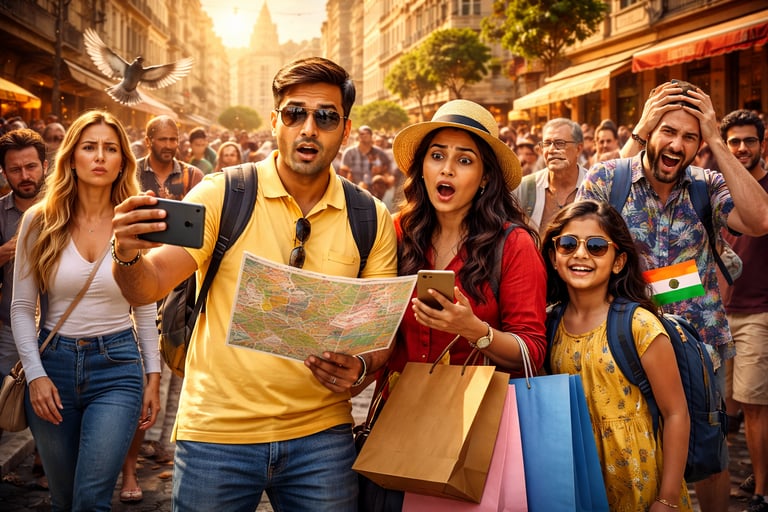
Indian tourists often travel in large family groups or organized tour groups.
Group tourism is extremely popular because it reduces travel costs and makes it easier for families to explore new destinations together.
However, large tour groups can sometimes attract attention in crowded tourist areas.
Local residents or other travelers may perceive large groups as noisy or disruptive, even when no serious rule-breaking occurs.
This perception can sometimes create negative stereotypes.
It is important to remember that group tourism exists in many countries and is not unique to Indian travelers.
Chinese, European, and American tour groups have faced similar criticism in the past.
Tourism Pressure in Popular Destinations
Another reason behind rising complaints is the overall pressure that tourism creates in popular destinations.
Cities that receive millions of visitors every year often struggle with overcrowding, rising prices, and environmental damage.
Local residents sometimes feel frustrated with tourists in general, regardless of their nationality.
In many famous tourist cities around the world, protests have even taken place against mass tourism.
When locals feel overwhelmed by large numbers of visitors, criticism of tourists becomes more common.
In such situations, complaints about specific groups can easily emerge.
How Media Narratives Influence Perception
Media coverage also plays a major role in shaping public perception.
When a few negative stories about tourists go viral, they can create the impression that a widespread problem exists.
However, the reality is often more balanced.
The vast majority of tourists from India travel responsibly and contribute positively to local economies.
Hotels, airlines, and tourism boards frequently praise Indian visitors for their spending power and enthusiasm for travel experiences.
But negative stories tend to spread faster than positive ones, especially on social media.
This imbalance can distort public perception.
The Positive Impact of Indian Tourists
Despite occasional criticism, Indian tourists remain extremely valuable for the global tourism industry.
Travelers from India spend billions of dollars every year on flights, hotels, shopping, restaurants, and entertainment.
Luxury brands, shopping malls, and tourism businesses actively target Indian visitors because of their strong purchasing power.
Many destinations are investing heavily in attracting Indian travelers by offering:
• Indian food options
• Hindi-speaking guides
• Special tourism campaigns
• Customized travel packages
Countries across Asia, Europe, and the Middle East continue to welcome Indian tourists enthusiastically.
The Role of Responsible Travel
Like tourists from any country, responsible travel plays an important role in improving experiences for everyone.
Learning about local customs before visiting a new country can help travelers avoid misunderstandings.
Simple actions can make a big difference, such as:
• Respecting local laws and traditions
• Keeping public spaces clean
• Following queue systems
• Being mindful of noise levels
• Respecting historical and cultural sites
These small efforts help create positive impressions and strengthen relationships between travelers and local communities.
The Future of Indian Tourism Abroad
International travel from India is expected to continue growing rapidly over the coming years.
As more Indians explore global destinations, travel awareness and cultural understanding will also increase.
Tourism industries worldwide recognize the enormous potential of Indian travelers and are investing heavily in attracting them.
While occasional controversies may appear online, they rarely reflect the behavior of millions of responsible travelers.
The future of global tourism will depend on mutual respect between visitors and local communities.
When travelers approach new destinations with curiosity, respect, and cultural awareness, tourism becomes a powerful force for connection and understanding.
For Indian tourists, the growing presence on the global travel stage represents not just an opportunity to explore the world, but also a chance to represent their culture positively wherever they go.
© 2026. All rights reserved.