
Why Tourism Is Declining in Goa in 2026: A Ground-Reality Analysis by Travel Explorer
Why is tourism declining in Goa in 2026? This in-depth Travel Explorer report explains the real reasons behind falling tourist numbers—rising costs, overcrowding fatigue, regulatory changes, shifting traveler preferences, and competition from emerging destinations.
ASIA
12/25/20254 min read
Introduction: Is Goa Losing Its Tourism Crown?
For decades, Goa has been India’s most recognisable beach destination. From backpackers and honeymooners to party tourists and digital nomads, Goa symbolised freedom, nightlife, beaches, and a laid-back lifestyle.
However, by 2026, a growing number of travelers are asking a difficult question: Is Goa still worth it?
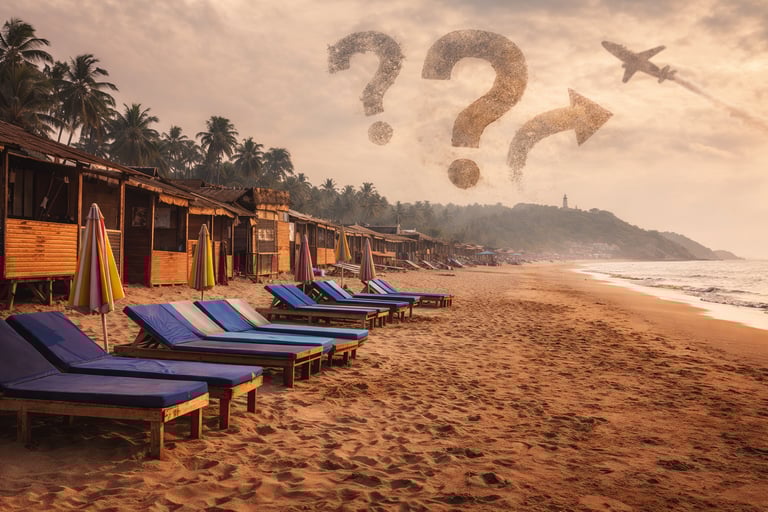
Tourism in Goa has not collapsed—but it has clearly declined in quality, satisfaction, and repeat visitation. Hotel occupancy rates fluctuate sharply, international tourist arrivals have not fully recovered to expectations, and many domestic travelers are choosing alternatives.
At Travel Explorer, we focus on real travel behavior, not surface-level trends. This article explores why tourism in Goa is declining in 2026, looking beyond headlines to uncover structural, social, and economic factors shaping traveler decisions.
Rising Costs Have Broken Goa’s Budget Image
One of the biggest reasons for Goa’s tourism slowdown is cost inflation.
Goa was once seen as affordable. That perception no longer holds.
Hotel prices during peak season often rival international destinations like Thailand or Vietnam. Beach shacks charge premium rates, taxis remain expensive due to lack of aggregators, and basic food costs have increased sharply.
For domestic tourists, the question has shifted from “Why not Goa?” to “Why Goa at these prices?”
When travelers realise they can get cleaner beaches, better hospitality, and lower overall expenses abroad—or even within India—the loyalty to Goa weakens.
Overcrowding Has Reduced the Experience Quality
Goa’s biggest success became its biggest weakness.
Over-tourism has:
Damaged beach cleanliness
Increased noise pollution
Reduced the sense of relaxation
Led to conflicts between locals and tourists
Areas like Baga, Calangute, and Anjuna are often perceived as chaotic rather than enjoyable. Many travelers report that Goa feels less like a vacation and more like a crowded festival during peak months.
Tourists today value experience quality over hype, and overcrowding directly damages that experience.
Environmental Degradation Is No Longer Ignored
Modern travelers are more environmentally conscious, and Goa’s ecological challenges are now visible.
Issues affecting perception include:
Beach erosion
Garbage management failures
Sewage problems in tourist belts
Illegal construction near coastal zones
Once-beautiful beaches now struggle with waste during peak seasons. Rivers and backwaters face pollution stress, and hill areas see uncontrolled development.
At Travel Explorer, we have observed that eco-aware travelers quietly exit destinations rather than complain publicly. Goa is experiencing that silent shift.
Regulatory Uncertainty and Nightlife Restrictions
Goa’s nightlife built its global reputation. However, increasing restrictions, inconsistent enforcement, and policy uncertainty have reduced its appeal.
While regulation is necessary, inconsistent application creates confusion:
Sudden shutdowns of clubs
Restrictions on beach shacks
Curfews affecting music venues
Crackdowns without alternative frameworks
International tourists especially prefer destinations with clear, predictable tourism policies. When rules feel uncertain, travelers choose safer alternatives.
Loss of Cultural Authenticity
Many travelers now feel Goa has lost its soul.
Rapid commercialization has:
Replaced traditional Goan homes with generic resorts
Reduced visibility of local culture
Turned unique villages into party zones
What once felt organic now feels manufactured.
Cultural travelers increasingly seek authenticity in places like Kerala, Uttarakhand villages, the North-East, and international destinations that preserve local identity.
Goa’s brand drift has diluted its emotional connection with repeat visitors.
Competition from Emerging Domestic Destinations
India’s travel landscape has changed dramatically.
Travel Explorer data shows growing preference for:
Gokarna and Varkala for quieter beaches
Himachal and Uttarakhand for slow travel
Meghalaya, Sikkim, and Arunachal for nature tourism
Andaman & Nicobar for premium beach experiences
These destinations offer:
Cleaner environments
Lower crowds
Better value
Fresh experiences
Goa no longer holds monopoly over beach tourism in India.
International Alternatives Are More Attractive in 2026
Another critical factor is international travel accessibility.
Countries like Thailand, Vietnam, Indonesia, and Sri Lanka now offer:
Visa ease
Competitive flight pricing
Better hospitality standards
Cleaner infrastructure
For a middle-class Indian traveler, a week in Southeast Asia often costs the same or less than Goa, while delivering a superior experience.
This shift is subtle but powerful.
Social Media Changed Tourist Expectations
Instagram and YouTube transformed tourism marketing—but they also raised expectations unrealistically.
Many travelers arrive in Goa expecting:
Empty beaches
Cinematic sunsets
Perfect service
Reality clashes with edited visuals.
Negative experiences spread faster than positive ones, especially when expectations are inflated. The result is disappointment rather than discovery.
Goa is not failing—it is being compared against an unrealistic digital version of itself.
Local–Tourist Tensions Are Increasing
Tourism fatigue among locals is real.
Rising rents, traffic congestion, noise complaints, and environmental stress have created friction between residents and visitors. Tourists sense this tension, even when unspoken.
Destinations thrive when locals feel invested in tourism benefits. When that balance breaks, hospitality suffers organically.
Seasonal Dependency Remains a Structural Weakness
Goa still relies heavily on peak seasonal tourism.
Off-season months see:
Closed shacks
Limited activities
Reduced transport options
Modern travelers prefer destinations that offer year-round value. Seasonal dependency makes Goa feel inconsistent compared to all-season alternatives.
Is Tourism Declining or Transforming?
From a Travel Explorer perspective, tourism in Goa is not disappearing—it is transforming.
Mass tourism is declining. Conscious, slower, premium tourism has not been fully developed yet.
Goa is at a crossroads:
Continue chasing volume tourism
Or reposition toward sustainable, high-value travel
The choices made now will define Goa’s future tourism identity.
What Goa Needs to Revive Tourism
For Goa to regain long-term appeal, several shifts are necessary:
Sustainable infrastructure investment
Better waste and transport management
Clear tourism regulations
Protection of local culture
Diversification beyond party tourism
Revival is possible, but it requires intent, not nostalgia.
Final Thoughts from Travel Explorer
Goa will always remain iconic. But icons must evolve to stay relevant.
The tourism decline seen in 2026 is not a sudden failure—it is the result of years of unchecked growth, rising costs, and shifting traveler priorities.
Travelers today seek meaning, comfort, authenticity, and value. Destinations that fail to adapt slowly fade from priority lists, even if they remain popular in memory.
At Travel Explorer, we believe Goa can recover—but only if it listens to travelers rather than markets to them.
Tourism does not die overnight.
It changes quietly—one traveler at a time.
© 2026. All rights reserved.